Differentiation Strategies For Health Club Competitors

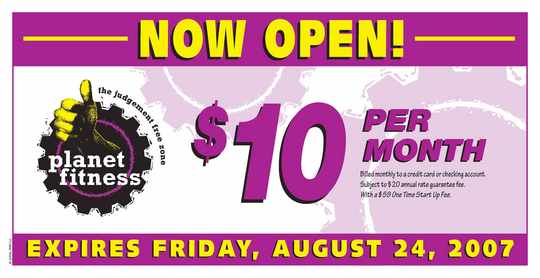
I get to speak with a lot of health club operators, along with other fitness participants, and a big question they ask is "how do I compete with budget competitors?" Concepts like Planet Fitness and others are offering memberships as low as $9.95 a month - this is concerning for many (see video below). I share the view that 80% of the U.S. market will be in the $19.95 monthly membership tier within a few years.

The Budget Gym trend is her to stay (check out How the Bricks and Mortar Fitness Business Is Changing), and therefore the issue of how to compete is an important one.

A key way to combat this price oriented competition is through a marketing differentiation strategy. A facility owner can create the perception of uniqueness in the minds of customers. Marketing differentiation strategies can be based on price, service, a unique focus or a different product mix. For more on being different check this out.

Differentiation marketing helps you stand out in a crowded marketplace. It can be an important strategy to implement, especially if there is a lot of similarities among competitors. An effective differentiation strategy gives customers a reason to choose your facility by pointing out subtle or less obvious differences or benefits that customers may not be aware of.

There are several types of marketing differentiation strategies. With a pricing strategy, you attempt to position your business as the low-price alternative - which is what the budget facilities are doing. A high-price strategy can also be used to create a perception of prestige. A product/service strategy emphasizes your program offering, outstanding group fitness via Les Mills is a good example of this. A customer service strategy points out your superior service. With a focused strategy, your marketing emphasizes a unique feature like a convenient location, or attempts to appeal to a specific market segment. But there is something even more important when it comes to differentiation for health clubs.

As Jonathan Fields recently commented with respect to health club differentiation:

It’s a clone club. And, that creates a big challenge for both the folks in marketing and sales. With a few exceptions, beyond the window-dressing, you could swap one brand for another fairly easily, leaving price and convenience as the primary selling points. In a market where there’s little competition, that’s survivable. But, as soon as more clubs with similar features arrive, you’re left with price as the primary differentiator and that’s a bad place to be. In an attempt to try to overcome clone club syndrome, club owners task marketers, advertising agencies and PR people with “positioning” their solution as bigger, better, cooler, cuter, edgier, hipper, funnier and different, when in reality it’s not.

Jonathan is right. Many clubs are very much the same so differentiation is difficult So what to do ? Why not focus your differentiation and marketing strategies on what prospects want - results. And by the way, why not utilize social media instead of high pressure sales tactics and old school direct mail ?

Watch the IHRSA Live Video below from IHRSA's Ask An Industry Leader Program. What do you think ? How should fitness facilities and health club operators use differentiation strategies to compete with low price budget gyms ? Contact me, Bryan O'Rourke, and share your views and experiences.


 

Want To Reach Your Health Goals In 2011 ? Keep Them Quiet

As 2011 is here I am sure you've thought of making a list of new initiatives or goals - in fitness and wellness these are mostly "lose weight", "get fit", "stop smoking", etc. People often make a point of announcing their "New Years Resolutions", thinking friends will offer support. Isn't it good networking to tell people about your upcoming projects or goals ? Surprisingly its not a good idea.

Watch Derek Sivers reveal why you should keep your plans and goals for 2011 to yourself if you want to achieve them and please contact me, Bryan O'Rourke, and tell me what you think ? Do you intend to keep your goals to yourself this year in order to achieve them ? What do you think is best practice in health and fitness to achieve individual goals ?

How Can We Positively Impact The Obesity Crisis In 2011 ?

I am proud to work in the fitness, wellness and the health club industry. There is a real push to make health clubs part of the solution behind the obesity and sick care crisis in the U.S. and I applaud IHRSA's leadership, particulary my friend and colleague Art Curtis, as well as Phillip and Dr. Jackie Mills for their work and book Fighting Globesity. I think increased activity certainly will make a positive impact, but as these professionals know its as much to do with how people eat ? Perhaps you read my recent post on the McRib sandiwch (if you did you get the picture). Jeston Leonard once said "six pack abs are made in the kitchen, not the gym." While we can't expect the solution to involve a six pack, there is some relevance in what Jeston said as it pertains to the obesity problem.

My colleague, partner and friend, Clint S. Lee, asked me this morning if I had seen Food Matters, the documentary. I had not. We've touched on the food system before in relation to the movie Food Inc. and our mutual enjoyment of Michael Pollan's book The Omnivore's Dilemma, its a topic we'd spoken about before and I'd written about as well. The movie isn't just about the unbalanced food system and how we eat but also about the sick care system, which I've also shared views on.

I am watching the movie and its pretty interesting.  A clip is below. Check it out and let me, Bryan O'Rourke, know what you think. How can we positively impact the obesity crisis in 2011 ? Tell me how health clubs and fitness facilities can become a part of the solution and more importantly how we can impact how we eat which causes so much of the problem.

Collaborative Consumption Meets The Fitness Biz

Business models fascinate me. As I've shared before, "If your industry, organization or self is not actively evaluating its model - you better start now. How products and services are conceived, developed, distributed and sold is increasingly changing as the result of a variety of factors." Of course I'm keeping the fitness and wellness industries in mind here and if you're involved in that space like I am you better as well!

Perhaps you've heard of the book, "What's Mine Is Your's - The Rise Of Collaborative Consumption", by Rachel Botsman (smart AND beautiful) and Roo Rodgers  (MS in Economics : I Luv That). On the left are examples of business models that reflect this trend. After reading the book I've been thinking, "Hey How Might This Apply To Fitness Facilities Business Models?"

A common health club model is "membership"; which in theory provides unlimited use of a place for getting fit. Problem is MOST "Members" don't visit their club very often. Would it make sense for people to join forces and demand that they're "memberships" (when they're not being used) could be used by others as a form of collaborative consumption ? What are the implications of that ?

Please contact me, Bryan O'Rourke, and let me know your thoughts. What forms of Collaborative Consumption will appear in the fitness and wellness industries and why ? Before you share your views and in the meantime watch the interesting video below that explains the concepts behind "Collaborative Consumption" as well as Rachel's TED talk. Great read Rachel and Roo. Thanks !


Collaborative Consumption Groundswell Video from rachel botsman on Vimeo.


The Fitness & Wellness Space Should Prepare For Change In 2011

I've written about the digital divide in the fitness and wellness industry before. Its the wide gap that exists between traditional fitness and wellness competitors and the elite few who are embracing the sea change of technology, consumer, and wellness trends that will surely reshape fitness and wellness organization's significantly in the coming years. As 2011 approaches I am paying closer attention to guessing when this impact is going to rear its head more clearly.

I recently reviewed Morgan Stanley's deck from the Web 2.0 Expo in San Francisco, "Ten Questions Internet Execs Should Ask & Answer" (its included below). You should really have a look at it.

Here is some notable content from the presentation on Commerce:"Wal-Mart in your pocket, location-based services……group buying power……flash sales…… deep discounts……transparent pricing……real-time alerts /ratings… virtual goods...immediate gratification…… Products must be fast + easy + fun. Have you ever seen constant improvement in products like we are seeing now? Is your business keeping pace? Do humans want everything to be like a game?"

Interesting questions huh ? I truly believe the leaders of the fitness and wellness business better start asking themselves the questions that Morgan Stanley is asking the leadership of Web 2.0. Afterall its about the customer and the customer is changing the way they consumer and interact: fundamentally.

What do you think ? Do you think Web 2.0 is going to impact the fitness and wellness industry increasingly in 2011 ? Contact me Bryan O'Rourke, and share your thoughts.