Technology Tools That Are Changing The World - Why Twitter Rocks

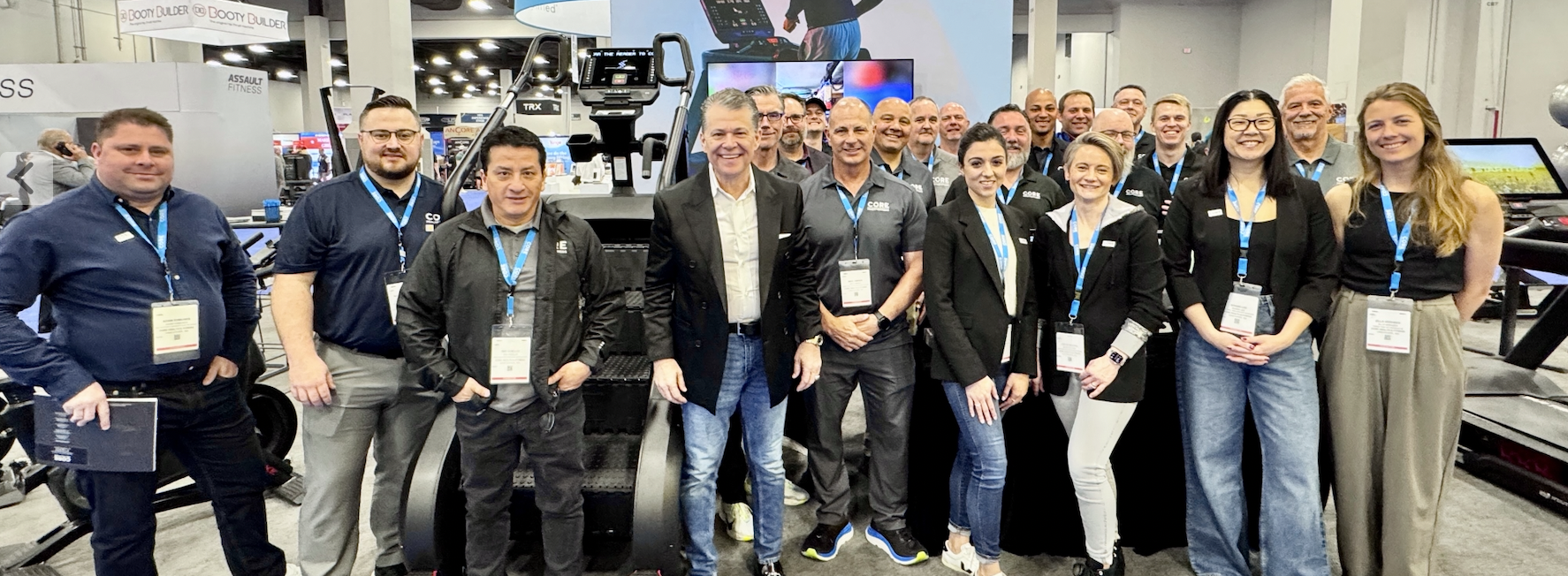
Some thought has been put into my profile on Linkedin. When it says "helps organizations and professionals realize their full potential and solve their biggest challenges" well that's what I am trying to do. Hopefully it shows every now and again. When @StartracFitness invited me to share views on social selling, there came a few points during the presentation where I saw that look in people's eyes. I'll call it the look of WOW, wonderment, realization; a look I live for because it can mean you are making an impact. When you can get an audience to rethink what they are doing, how they are doing it and why they should maybe do it differently its a win. Its that aha moment. I saw a few of those looks last Thursday in Irvine California. (see the video below for an example of what spurred the look).

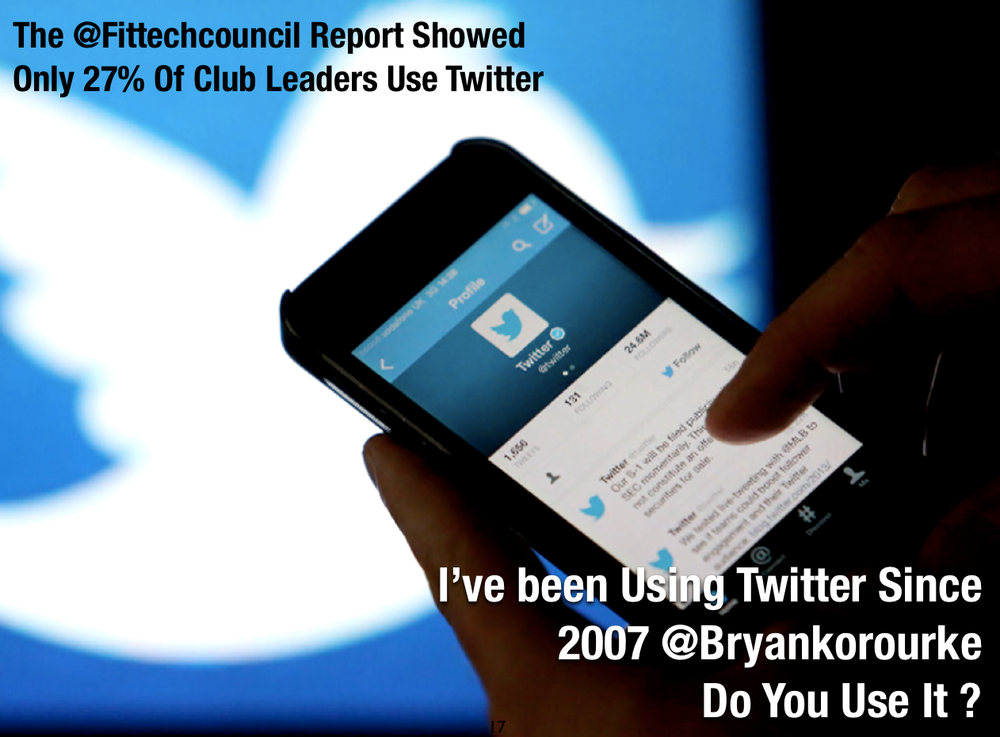
Hopefully you know my view: technology has created awesome potential for doing good for people, for customers for the world , if used correctly. Technology tools like Twitter are a good example, yet many still don't use the tool. With around 218 million active users you can use Twitter like Google and search to learn so much information as well as connect with many professionals and people that share your interests.The 2014 Fitness Industry Technology Council U.S. Health Club Survey Report showed, however, that only 27% of club leaders use twitter at all.

I use Twitter because its fantastically powerful. Health clubs, service and consulting organizations, like Star Trac Fitness, non-profits, and others can all use Twitter. Leaders in the health club business including @RobertjDyer , @ChuckRunyon, @SarahRobbOh, @SFable, @ECRetro , @GMelstrand , @CEOScott and many many others use the Twitter platform.

To learn more about why Twitter Rocks visit Twitter's Youtube Account. Do you use it ? Why or why not ? I'd love to hear what you have to say. And on a final note many thanks go out to the @StarTracFitness team and my team including Michael Bruno, Terry Woods, Vanessa Lee, Jeff Dilts, Sal Pellegrino, Eleanor Hisey, Robert Dyer, Maureen O'Rourke and so many others. Thanks to you all for the chance to do what I love to do.

The Revolution Of Bricks And Mortar Fitness - The Future Of Health Clubs Is Emerging

This Thursday January 16, 2014 at 2:00 pm EST I'll be sharing a preview of my 2014 presentation at IHRSA this year during a FREE IHRSA webinar (hope you will attend). The future health club is going to emerge soon and to understand what it might look like we only have to consider what is happening in retail. Be it Starbucks generating 10% of its total transactions now via its mobile app, or Apple eliminating the check out counter in its stores via its adoption of mobile check outs, technology is being applied to improve service and deliver customized experiences that bridge the divide between the digital and physical worlds while making customers much happier. As the future emerges business models that do this well will be the ones that will succeed because they are redesigning their models to address the new customer, one relying on mobile technology and one having all of the power.

Cisco’s Inernet Business Solutions Group study found that a majority of consumers have advanced beyond the capabilities of most retailers and this is true for most health club operators as well in my opinion. Cisco’s Customer Experience Report documents that consumers prefer more automated and personalized digital buying experiences. By embracing mobile trends, where two thirds of U.S. adults have smartphones and use them to search and conduct commerce, smart operators will be able to deliver service and experience in new ways that will redefine business models. If you don't think these trends are relevant, check out the FIT-C 2014 U.S. Health Club Technology Survey Report.

PSFK's recent report (below) on the future of retail in 2014 is something you should read, watch and think about because these technologies and new approaches are changing how businesses operationalize, market and service customers today. These trends are going to be included in future health clubs and it will completely change how the industry serves its customers. Please join me at #IHRSA2014 this year in San Diego on Friday March 14, 2014 ay 1:30 pm where I'll explore what the future of mobile means for the health club industry.

PSFK Presents The Future Of Retail 2014

from

PSFK

What do you think? I'd love to hear your views. An increasingly competitive landscape  is going to require brands to think about technology adoption and deployment around the customer to create better experiences. Do you agree ? Shouldn't we work together to make that possible ?

About Bryan

Bryan O’Rourke is considered by many to be a thought leader on technology, health club and wellness trends. He has been quoted in global periodicals like the Wall Street Journal, and has been published in journals around the world on his views of how technology will create the dawn of a new era of opportunity for the health club and fitness industries. In addition to being an industry expert, Bryan is a technologist, financier, shareholder and executive in several fitness companies. He has spoken on a range of business and trend topics on four continents. As a contract executive and advisor, Bryan wears many hats, including working for Fitmarc, which delivers Les Mills programs to over 700 facilities in the US. He advises successful global brands, serves as a member of the GGFA Think Tank, on ACE's Industry Advisory Panel and is CEO of the Fitness Industry Technology Council. To join FIT-C visit www.fit-c.org . To learn more contact Bryan here today .

FIT-C Releases The 2014 US Health Club Technology Survey Report

2014 U.S. Health Club Technology Survey Report

from

Bryan O'Rourke Business Leader In Fitness, Wellness & Technology

A survey on technology that included 746 U.S. based health clubs was conducted at the end of 2013. The survey report was just published by the Fitness Industry Technology Council (Fit-C). The 2014 U.S. Health Club Technology Survey Report possed 14 questions on technology adoption to owners and managers of health clubs.

The results were very interesting. You can obtain a copy for free here and the survey infographic here. Social media adoption, for example, as a key vehicle for marketing and advertising is widespread in U.S. clubs according to the survey results. 97% of all health clubs surveyed indicated that they have a Facebook page and social media and websites are the top 2 marketing and advertising vehicles clubs use today.

While social media is widely used for promotion and advertising, only 30% of clubs enable prospects to join online and a mere 39% provide online account management to members. Today 61% of global consumers prefer to shop in an omni-channel, self-service and automated way according to Cisco’s Customer Experience Report.  According to recent Forrester Research, organizations will differentiate themselves  by delivering consistent and customizable customer experiences digitally. A clear opportunity in online service exists in the Club market.

2014 FIT-C US Health Club Technology Survey Infographic

from

Bryan O'Rourke Business Leader In Fitness, Wellness & Technology

Finally, while the report addresses a number of adoption trends, two survey questions stood out. First, 62% of surveyed clubs say costs are blocking wider technology adoption. We expect technology costs to continue to decline and therefore believe adoption of technologies will expand significantly going forward. Second, only a third of respondents believe interoperability is important. We now know that nearly 60% of members come to the gym with devices and only a third of those devices connect with equipment. We also know that customers are expecting a more omni-channel experience and so connectivity among technologies is going to be essential to create a better experience. Interoperability is a key underlying mission of the Fitness Industry Technology Council because of this.We need to create standards to create connectivity among all brands of equipment, among other standards, to enable enhanced consumer experience in clubs.

What do you think? I'd love to hear your views. An increasingly competitive landscape from outside the traditional bricks and mortar health club industry is going to require brands to think about technology adoption and deployment around the customer to create better experiences. Do you agree ? Shouldn't we work together to make that possible ?

About Bryan

Bryan O’Rourke is considered by many to be a thought leader on technology, health club and wellness trends. He has been quoted in global periodicals like the Wall Street Journal, and has been published in journals around the world on his views of how technology will create the dawn of a new era of opportunity for the health club and fitness industries. In addition to being an industry expert, Bryan is a technologist, financier, shareholder and executive in several fitness companies. He has spoken on a range of business and trend topics on four continents. As a contract executive and advisor, Bryan wears many hats, including working for Fitmarc, which delivers Les Mills programs to over 700 facilities in the US. He advises successful global brands, serves as a member of the GGFA Think Tank, on ACE's Industry Advisory Panel and is CEO of the Fitness Industry Technology Council. To join FIT-C visit www.fit-c.org . To learn more contact Bryan here today .

Globalism A Huge Driver Of The Health and Fitness Business In 2014 And Beyond

What Globalism means in the traditional sense isn't necessarily what everyone thinks. From my perspective its simple: our world is becoming more interconnected. For the health club and fitness industry that means that growth is coming increasingly in new countries with various cultures, languages and resources.

The world has about 7 billion people living in it today (there are almost as many smartphone internet devices as people). The shift to Asia, which has driven 50% of economic development over the past decade and the realization that other cultures and languages are comprising larger shares of our global consumer base are just a few of the implications of "Globalism". What that means is a world of increasing opportunity and change. Those who are prepared to embrace this with flourish while others who avoid it will fail.

Please watch the video a New Global Era In 2014 below and tell me, Bryan O'Rourke, what do you think ? Is 2014 the New Global Era for our industry ?

A New Global Era In 2014 - The Globalism Trend In 2014 - Bryan O'Rourke from Bryan ORourke on Vimeo.


About Bryan

Bryan O’Rourke is considered by many to be a thought leaders on technology, health club and wellness trends. He has been quoted in periodicals like the Wall Street Journal, and has been published in journals around the world on his views of how technology will create the dawn of a new era of opportunity for the health club and fitness industries. In addition to being an industry expert, Bryan is a technologist, financier, shareholder and executive in several fitness companies. He has spoken on a range of business and trend topics on four continents. As a contract executive and advisor, Bryan wears many hats, including working for Fitmarc, which delivers Les Mills programs to over 700 facilities in the US. He advises successful global brands, serves as a member of the GGFA Think Tank, on ACE's Industry Advisory Panel and is CEO of the Fitness Industry Technology Council. To join FIT-C visit www.fit-c.org . To learn more contact Bryan here today .

How Technology Can Make Human Experience Richer And Better - A Case In Point

People often see technology as being the antithesis of humanity. I guess this view was created in the mind of Terminator fans years ago (Watch The "I'll Be Back" Scene). The evidence doesn't always substantiate the modern world reality on this point. For example, Amazon's Net Promoter Score was second highest among US brands last year at 76 . You don't speak to a human when buying from Amazon yet the brand outperforms banking giant ING with a NPS of only 48. Perhaps the technical human divide isn's so wide. The point is technology can serve needs and augment human interaction in very impactful ways, creating more human experiences. Helping people reach their potential and contribute when they might not be able to otherwise is the greatest example of the potential technology offers to augment humanity; and its just getting started.

Here's a case in point, thanks to a recent tweet from @AugieNieto whom I follow closely on twitter, with respect to people suffering from disabilities or various physical limitations due to a variety of conditions and situations. If you are in the fitness industry you no doubt are well aware of Augie and his teams fight to progress research around ALS. My colleague and dear friend @LindseyRainh2o has a family member battling the disease as well and we are supporters of Augie's Quest to identify a cure and you should be one to :) . Augie's recent tweet included a TED Talk, below for your review, that demonstrated the power of technology in enabling people to continue to lead meaningful lives despite their limitations ( Thank you Augie). Here's the story of Henry Evans as described n the Ted Talk website.

At age 40, Henry Evans was left mute and quadriplegic after a stroke-like attack caused by a hidden birth defect. Years of therapy helped him learn to move his head and use a finger -- which allows him to use a head-tracking device to communicate with a computer using experimental interfaces.

Now, Evans is a frequent and enthusiastic collaborator with robotics teams who are developing tools to help the severely disabled navigate their lives. He collaborates with Georgia Tech professor Charlie Kemp on using the Willow Garage PR2 robot as a surrogate, as well as Chad Jenkins' RLAB at Brown on quadrotors for expanding range of motion.

As the Willow Garage blog post says: "Every day, people take for granted the simple act of scratching an itch. In Henry's case, 2-3 times every hour of every day he gets an itch he can't scratch. With the aid of a PR2, Henry was able to scratch an itch for himself for the first time in 10 years."

Technology is a great human accelerator. Using it wisely can make a big impact on the lives of not only Henry but everyone. What do you think? I'd love to hear your views. As the health club industry increasingly interconnects technology and human interaction I think its important to keep these real world examples in mind. The potential to create meaningful human experiences by relying on technology in the right way is limited only by our imagination. Do you agree ?

About Bryan

Bryan O’Rourke is considered by many to be a thought leaders on technology, health club and wellness trends. He has been quoted in global periodicals like the Wall Street Journal, and has been published in journals around the world on his views of how technology will create the dawn of a new era of opportunity for the health club and fitness industries. In addition to being an industry expert, Bryan is a technologist, financier, shareholder and executive in several fitness companies. He has spoken on a range of business and trend topics on four continents. As a contract executive and advisor, Bryan wears many hats, including working for Fitmarc, which delivers Les Mills programs to over 700 facilities in the US. He advises successful global brands, serves as a member of the GGFA Think Tank, on ACE's Industry Advisory Panel and is CEO of the Fitness Industry Technology Council. To join FIT-C visit www.fit-c.org . To learn more contact Bryan here today .