Where Is Google Health In the Evolution Of Wellness ?

I had a great few days this week with some of the key leadership of MFA. The new executive director Ken Germano, along with other board members and participants, engaged in a fulfilling workshop on the future of the association, conducted by Bill Shannon, the former Chairman of ACE, among his other accomplishments.

I can't get into details, but I do expect great things to emerge from MFA in the coming years. One of the activities Bill engaged in was asking us to vision 5 years down the road. Technology is obviously a major component of the wellness revolution and during the chats with leaders in the medical fitness business, I raised the topic of Google Health. This FREE solution is robust and enables people, physicians and other service providers to enjoy access to medical records among many other features. Check it out here. Interestingly it hasn't been succeeding. In a June 2010 article, John Moore asked about Google Health's future:

Since its initial launch to much fanfare, Google Health has struggled to be relevant.  Since its formal launch in May 2008, Google Health has not dedicated the resources to build out this platform into a truly engaging ecosystem of applications to assist the consumer in managing their health or the health of a loved one.  Rather than build out new features, support a broadening array of standards, focus on the necessary business development that is required to establish partnerships, Google has taken a laissez-faire attitude to this product/service never dedicating more than a handful of engineers to the effort and most often flexing in outside vendors, such as IBM who built the module to bring in biometric from Continua compliant devices.

As a patient it is interesting to me how Google health seems so unknown to so many. The diagnostic group Qwest offers an interface for medical records with Google Health , yet not one of my doctors uses it or even knows about it. When I've brought up Google health in the past in the fitness business or with medical fitness professionals not a single person has been aware of its capabilities, which are significant. That confuses me.

I've included a video on Google Health below and wonder: Why is the solution not being adopted by more care proviers ? Where Is Google Health In The Evolution Of Wellness ? Please let me, Bryan O'Rourke, know your thoughts.
5 Important Technology Trends For 2011


During my upcoming IHRSA presentation on using technology to improve member sales and retention I'll touch on 5 key technology trends. I'll also be sharing some of these concepts and more during the FILEX presentation in April on the future of the fitness industry.

Let me know what you think. How are these trends impacting your fitness or wellness business ? Contact me Bryan O'Rourke and please share your thoughts.


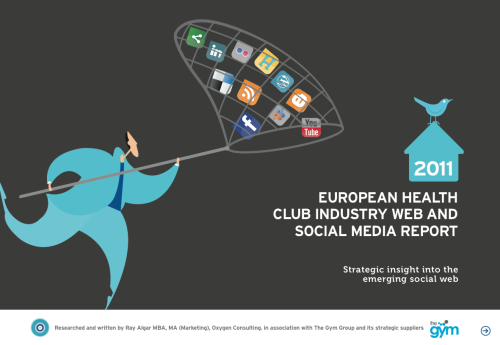
2011 European Health Club Industry Web And Social Media Report

Getting to work with smart people is something we all love - at least I do. Ray Algar is the kind of collaborative thinker that makes me get up in the morning knowing there is a greater purpose for working in the fitness industry (not the one of today necessarily but the one emerging for the future).

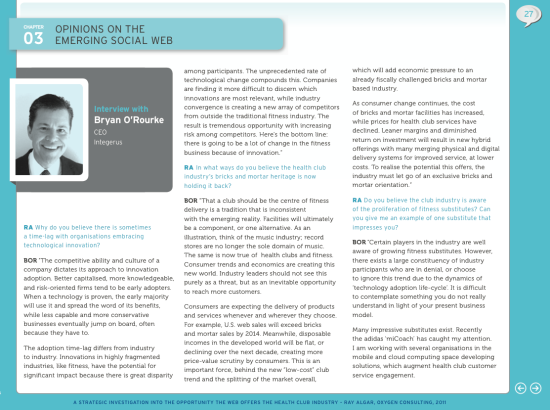
His recent report, the 2011 European Health Club Industry Web And Social Media Report , is another example of the great collaborations he engages in. The report is an excellent read for anyone in the fitness industry. I'll touch on some of the report's findings and more during my presentation at IHRSA on Wednesday morning this year (2011). Two sections from the report are included below and you can obtain the report in its entirety here . (Thanks Ray for allowing me to contribute). Please do read it.

So what do you think ? How do you think the new dynamics of collaboration and communication via technology platforms is going to impact the fitness and wellness business ? Please contact me Bryan O'Rourke and share your views. What do you make of Ray's research and my thoughts and comments below ?


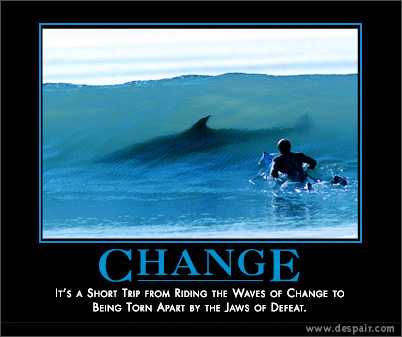
How Will Change Happen In The Fitness And Wellness Industry ?

I write about change; the change that is coming as a result of mega trends in technology, globalism and demography and the need for the fitness and wellness industries to change to reach their promise. But how does change happen ? Made to Stick authors Chip and Dan Heath describe change in their latest book Switch: How To Change Things When Change Is Hard. They set out a framework for 3 ways change happens:

1. Direct the Rider (the conscious mind), eliminating what looks like resistance but is more often a lack of clarity by providing crystal-clear direction;

2. Motivate the Elephant (the subconscious), eliminating what looks like laziness but is more often exhaustion by engaging emotions to get people on the same path as you; and

3. Shape the Path (the situation), eliminating what looks like a people problem but is more often a situation problem, by making the environment more conducive to the change you seek.

So in watching the 60 minutes story last night about the Tunisian fruit vendor 26-yr.-old Mohammed Bouazizi, and how he set himself on fire out of frustration which resulted in a Facebook fueled revolution in the otherwise peaceful nation, I wondered about change. Obviously Bouazizi indirectly embraced all 3 of the frameworks, ending his life as a result. How tragic. Watch the story below and tell me, Bryan O'Rourke, what do you think about change ? Does it happen peacefully and slowly or more often is it started by a spark that fuels a sudden revolution ? What do you think needs to happen for fitness and wellness to become more of a part of our culture and ethos ? Who will be the catalysts ?


About the author:

Bryan O’Rourke is a health club industry expert, technologist, financier, and shareholder and executive in several fitness companies. He consults with global brands, serves as a member of the GGFA Think Tank is Chair of the Medical Fitness Association’s Education Committee, is President of the Fitness Industry Technology Council and a partner in Fitmarc, Integerus, Fitsomo and the Flywheel Group. To learn more contact Bryan here today .

What Does Border's Bankruptcy Have To Do With Health Clubs ?

My friend Michael Scudder Skyped me this am and asked if I had seen the news on Borders, who just filed for Chapter 11. His skype text said,

Good morning, Bryan!  I assume you saw that Borders declared bankruptcy this morning.  You called that shot a couple of years ago.  Indications for the bricks-and-mortar fitness industry??

I wish I were that smart Michael. However, it is true that the head winds contributing to the book industry's reinvention, ala Borders, are also being faced by the Bricks and Mortar fitness industry.

THE key component of business model viability is this: can an organization consistently create and deliver something at a certain cost and sell it at a higher price ? This is a challenge for many industries and it is instructive to watch what is happening in the book store business today as the "middle men", the publishing and retail book store industries are getting squeezed. The entire book industry is starting to experience what every business is going to experience: tremendous upheaval as creators have more options to create and distribute goods and services. Thus alternative solutions to customer needs are reinventing markets and business models.

Geoffrey Fowler and Jeffrey Trachtenberg wrote a great WSJ article titled, "Vanity Press Goes Digital" , which dissect the shift occurring in book creation. Here is a excerpt:

But some publishers say that online self-publishing and the entry of newcomers such as Amazon into the market could mark a sea change in publishing.

"It's a threat to publishers' control over authors," said Richard Nash, former publisher of Soft Skull Press who recently launched Cursor Inc., a new publishing company. "It shows best-selling authors that there are alternatives—they can hire their own publicist, their own online marketing specialist, a freelance editor, and a distribution service."

In the fitness industry, as with many other industries, there are similarities to the book business. If you are skeptical of what I am saying realize history includes many examples. Long before there were iPads and Kindles were other disruptive technologies like the printing press and Guttenberg Bible. turned the world on its head. We are here again. I think the bricks and mortar fitness business will survive, but there will be increasing competition from alternative digital services and competitors who blend a combination of digital and personal delivery that create unique customer member experience.

So tell me, Bryan O'Rourke, what do you think ? Does the Border's Bankrtupcy relate to the health club industry ? Are changes in the business models for health clubs going to create opportunities and disruptions in the industry ?

Watch the interesting video below and thanks for your thoughts.