What Does Google Health's Failure Have To Do With Watergate ?

I like good movies for a lot of reasons but often for the memorable quotes you get from time to time. I enjoy sharing a line from an iconic film at a cocktail party when referencing the latest topic Du jour. In All The President's Men, Deep Throat, the government informant who spoke in riddles and metaphors in response to Woodward and Bernstein's questions recounted, "follow the money". Following the money is often good advice and is one of those quotes that I love to use. It explains a lot of things.
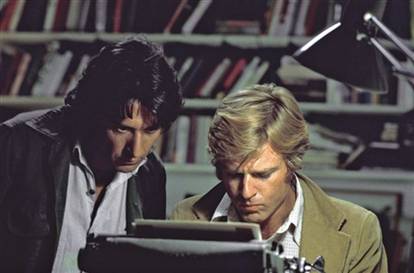
So what does Google's recent announcement that it is discontinuing Google Health have to do with Watergate ? Just "Follow The Money".

I a March 2011 post "Where Is Google Health In The Evolution Of Wellness ?" I talked about the promise of technology in evolving health care and fitness into wellness. Interestingly I received a number of communications following the post from people who seemed to know Google Health was being shuttered. But why would this promising idea get the shaft ? In a recent Technology Review article , How A Broken Medical System Killed Google Health , correspondent David Talbot wrote:

At the end of this year, Google Health will flat line. The service couldn't encourage many people to import or analyze their health data, and experts say its untimely death is, in many ways, an extension of U.S. health-care providers' failure to share data across institutions, or make it easy for patients to obtain it.

David's tag line to the article said it best, "Google would have had to fix a balkanized U.S. health-care system to make the service catch on." He's right and I know it first hand.

I recall my treatment for colon cancer and repeated and unsuccessful attempts to get my group of five physicians to utilize Google Health. Despite Quest Diagnostics providing access to my diagnostic records electronically for free on Google Health, not one my physicians knew about it or cared to use it. Instead I would have to suffer duplicate tests, hauling records around and harassing people to fax results. Even more interesting was a strategic session with leaders in the Medical Fitness field. Not one of the participants knew what Google Health was. Amazing but why ? Why would a system that offered real solutions to a broken system be so unfamiliar to so many ? Follow the Money.

The failing of and lack of awareness of solutions like Google Health in either the "Sick Care" system or the "Wellness" prevention system highlights the obvious: there is NO money in improving health outcomes. As Bryce William's recent article in Fast Company "There Is No Such Thing As A Health Care Consumer" points out about the failure of Google Health:

...the underlying cause is that there is no such thing as a consumer in the American health care system today. A consumer is someone who uses personal dollars to buy goods and services for his or her own use. In our health care system, the users of medical services are, of course, individuals. But users don’t pay the largest share of costs for these services. Employers, the government, and health insurance companies do. So while people may be highly concerned about quality medical care, most are not motivated to manage costs.
 With that fundamental understanding, it’s easy to see why Google Health failed.

And that is the problem, its up to consumers, who have no real incentive to improve their health, and its up to delivery systems that have no incentive to deliver it. So when I ask What does Google Health's Failure Have To Do With Watergate, you might just "follow the money".

So tell me, Bryan O'Rourke, why do you think Google Health failed ? Why has the U.S. and world's populations become less healthy while the cost of care sky-rockets amid a push for healthier lifestyles by the fitness industry. Is it a broken system ?


Do You Have A Social Media Policy For Your Organization ?

One of the biggest questions I get from fitness industry leaders including YMCA executives and health club managers and owners is this: "Can We Control How Our Employees Use Social Media and How Do We Do It ?" The main point of the question is concern over what an employee might do given how that could reflect on the business.

its a good question and it really involves a few issues rolled into one.

The first is this: "What is your social media strategy?;

The second is, "What is your culture?"; and

The third question is, "Where is your business located?"

Many organization's don't really have a clear social media strategy and until one is established how you might benefit from or be harmed by employees participation in the strategy will be unclear. You need a plan with defined outcomes. If your employees are very clear about what your brand represents and how you want and need to communicate that to the world, implementing an integrated policy around that strategy is much easier (see my post on the transformation of customers and organizations - Empowered).

The first point closely relates to the second of culture. How much control do you really want to have ? Some organizations are far more controlling than others. They might chose to govern and control ALL content regarding their business in the social space. While this often is very short cited and limits the upside of social media, it would have a significant implication on the rules. Some organizations have more open cultures. I've actually seen a social media policy for employees that simply said, ""Be on brand, be interesting".There isn't a cookie cutter answer and what is even more challenging is that good social media strategy requires continual learning, so policy and practice is going to change over time. You need flexibility.

Finally, the legal rules on employment policies vary from state to state. You will need to reference your legal counsel to take a look at the policy initiatives you have to confirm they are enforcable and act in tandem with your overall employment policy practices.

Here are many examples of social media policies for you to review. Its a great tool. My thanks to the Social Media Governance Organization for sharing them.

So tell me, Bryan O'Rourke, does your organization have a social media policy ? What is your culture like and how has social media played into it ? Watch the video below.


Being Wrong - A Key To Innovation

How does it feel to be wrong ? How does it feel to realize you were really really wrong ? Culture trumps strategy and often a leader's ego is the BIGGEST stumbling blocks to an organization's progression and important innovations.

Watch Kathryn Schulz , @wrongologist and author of Being Wrong, Adventures In The Margins Of Error talk about culture and  common attitudes about right and wrong and the problem it creates. In my view its THE key problem to industries, organizations and people progressing to new and better ways of solving our biggest challenges.

Tell me, Bryan O'Rourke, what do you think about being right and being wrong ? Do you agree with Kathryn's views ? Is ego a big obstacle to you or your organization progressing to a new level ?

Mobile Trends Are Creating Change & Opportunities For Health Clubs


Check out this PPT deck on Mobility trends and their impact on the health club business. Tell me what you think. Are you laying plans for the future of mobility ? You should.

Bryan O’Rourke is a health club industry expert, technologist, financeer, shareholder and executive in several fitness and health club business service companies and has advised many global brands on strategy and execution. He is also a partner in The Health Club For Women and Chairman of the Medical Fitness Association’s Education Committee. To learn more contact Bryan here today .

Mobile Trends And Fitness - The Future Is Here

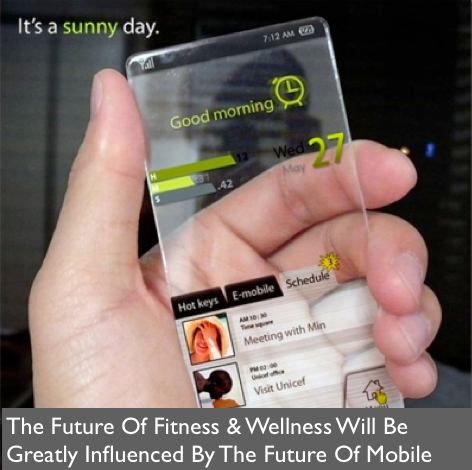
Dan Frommer's recent post, "The Future Of Mobile Is The Future Of Everything" quoted Matt Galligan, co-founder of SimpleGeo, a location services company. When asked about the future of mobile Matt said, "In my opinion, the 'future of mobile' is the 'future of everything'.", hence the article's title. Matt's right and in the world of fitness and health he's even more right.

Check out what 20 thought leaders are saying about mobile trends here and tell me, Bryan O'Rourke, how are you planning for the mobile revolution when intelligent devices like smartphones and tablets will be THE key way people interact with the web and manage major aspects of their lives ? Do you realize how much Internet search is being conducted using mobile devices ? Do you know how to create a unique application for your business for under $500 ? Is your website mobile friendly ? For more interesting tidbits check out this article.