The New Paradigm of Content - It Isn't Just About Books

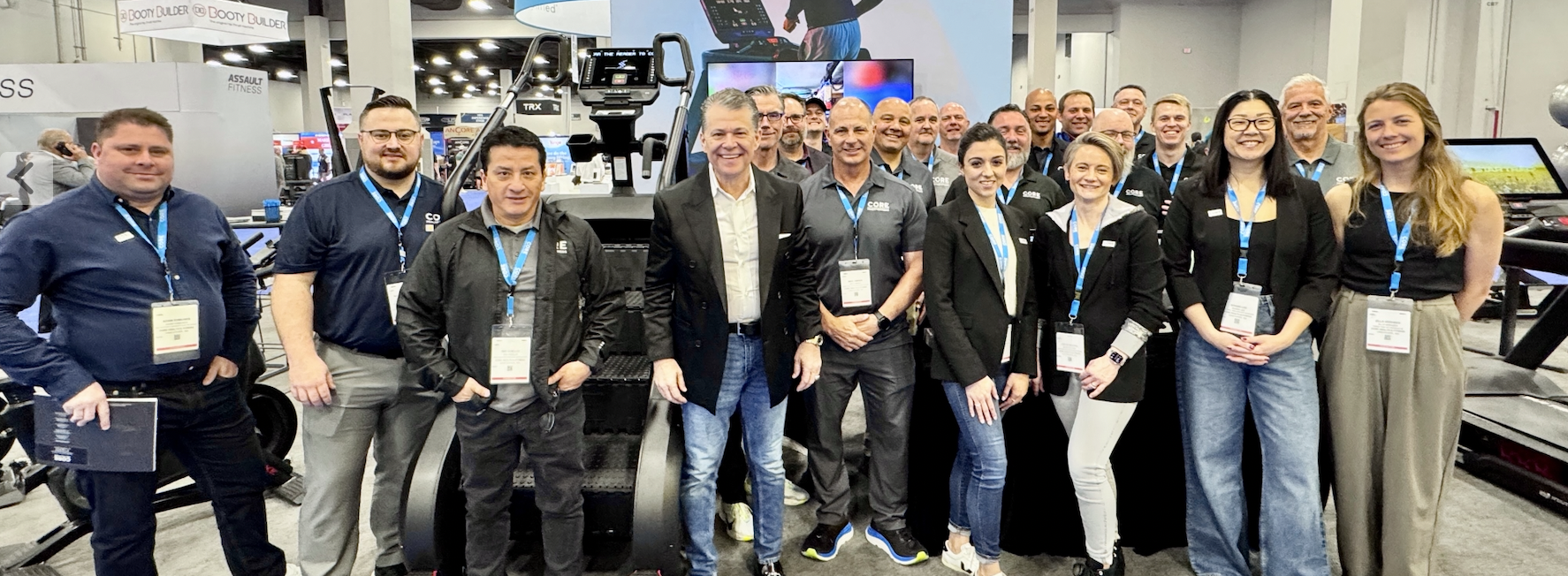
NYT reporter Nick Bilton shared an insightful article on the recent post of book publisher, designer and writer Craig Mod (on the left with monks) titled "Former Book Designer says Good Riddance to Print". It caught my attention because there are a few things Craig shares that not only apply to the book industry and they apply to ALL industries relating to content. Here are Craig's two most important points.

1. Content can be broadly grouped into two types: content where the form is important, such as poetry or text with graphics, and content where form is divorced from layout, which he says applies to most novels and non-fiction. This same categorization applies to other content formats.

2. Instead of arguing about pixels versus paper, as many book lovers tend to do, or any form of content comparison including vinyl vs. digital iPod for that matter, it is more useful to focus on whether the technology is a good match for the content. In other words, does the format make the content more appropriately consumable ? This is where new technologies will not just be replacing how things were done but creating new ways that heretofore where impossible.

When evaluating the issue of content and its deployment Craig's approach clarifies some questions. For example, I work in the fitness industry and witness the distribution of program content in the form of hard copy DVD and CD's. In the arena of fitness education, which is what this hard copy content is used for,  the content is very difficult to consume, a direct function of the manner in which the content is deployed.  When evaluating the replacement of this hard copy content, there is no doubt that new interactive forms will be of great benefit. As Nick points out in the article:

"Mr. Mod also discusses the need to push the boundaries of how we interact with content on these devices. Apples’s iBookstore, for example, takes the book metaphors too literally in a digital setting and doesn’t innovate enough given the tools at hand. “The metaphor of flipping pages already feels boring and forced on the iPhone. I suspect it will feel even more so on the iPad. The flow of content no longer has to be chunked into ‘page’ sized bites.” For hundreds of years, we’ve been consuming information on static pages, and for the most part, this content has been presented with a beginning, middle and end. Nonlinear, digital platforms will prompt a new range of thinking about stories and how to tell them."

For all the objections every industry will have to change and the upheavals it creates, the bottom line is that these technologies will have a great benefit in making people more productive. I'll leave you with this final quote which should be enough of a reason for folks to stop objecting so much to the idea that old copy books will be largely eliminated. There is much good when you really think about it:

"Once we dump this weight, we can prune our increasingly obsolete network of distribution. As physicality disappears, so, too, does the need to fly dead trees around the world.”

Cloudforce 2010 - San Jose

You know I'm a big fan of the cloud and it just keeps getting more and more interesting. Now the next generation of cloud computing is upon us. It’s mobile, collaborative, and social and available today with Cloud 2. It’s changing everything! A big salesforce.com event in San Jose on June 22, 2010 will address the Cloud 2 trend.

Salesforce.com Chairman and CEO Marc Benioff and industry luminaries from CA, VMware, and BMC, and thousands of others will see how the next generation of cloud computing will transform entire businesses. Watch !

Its All About Your Attitude

Check out this wonderfully animated video, Professor Philip Zimbardo (of the famed Stanford Prison Experiment) "conveys how our individual perspectives of time affect our work, health and well-being. Time influences who we are as a person, how we view relationships and how we act in the world."

Personal Data - Driver Behind the Revolution

Elliot Van Buskirk had a recent post on Caterina Fake's (pictured on left) recent talk at the Wired Business Conference titled, "Mapping Desire, Exploring the Science of Online Recommendations."

Her observations on personal data and new web functionality are interesting: “One of the things that we saw with the efflorescence of Web 2.0 was that there are now exobytes and exobytes of data online. The future of the internet goes to whosoever is able to make all of this information work for the benefit of people out there who are trying to find things and are standing on the corner of 44th street and 5th avenue and it’s their mother’s birthday in two weeks, and they know it, and their computer knows it, and also knows that her taste is such that if there’s three scarves that are actually in inventory at Sax 5th Avenue, and if she just walks up the five blocks, she can get that for her. If you are able to solve problems like that for people, that will be immensely useful to people.”

Her firm Hunch gathers such a wide variety of data from its users that it may in fact be able to fill in gaps left unfilled by vertical recommendation engines such as Amazon’s and Netflix’s. For example, it has ascertained that people who prefer their sandwiches cut diagonally also prefer Ray-Ban sunglasses.

What Catarina is talking about is the 4th stage of the 5 stages of the social web conceived by Jeremiah Owyang and which I've written about before. The fourth stage being an increasingly personalized experience for every user based on their unique profile. Watch Catarina explain below.


The BP Disaster and You

I was reading the WSJ again today and came across an Op-Ed by Holman Jenkins, Jr. titled "Obama vs. BP and You". Mr. Jenkins is a smart man, no doubt. However, his editorial really misses the most relevant point around the BP disaster: how duplicitous and irresponsible many of the American PEOPLE are because their behavior is a significant contributor to disasters like the current BP situation in the Gulf.

Before I continue, you should know, I live in Louisiana. My uncles and relatives make a living from the oil and gas industry and from the seafood industry. Point is the situation is disturbing and I believe that my friend Mr. Jenkins and many others should start spending less time blaming others and more time taking responsibility.

Now obviously BP's hands are dirty here. They demonstrated some pretty irresponsible behavior. However, when you are drilling for oil a mile under the ocean, anything that can go wrong will go wrong. That the disaster is a surprise is a joke and I don't recall folks failing to fill up their tanks given concerns before the crisis unfolded. There weren't any, so long as oil remained relatively cheap.

Holman in his Op-Ed, like many commentators today, fails to address the most pertient issue : the BP disaster and the public's response is a reflection of our hypocritical culture. As a nation we cannot on the one hand bemoan our political leadership, whom we elected, and cry foul to BP either for their conduct, while we turn the thermostat down to a more comfortable 74 degrees. You can't have your cake and eat it too and that is the trouble today. Most American's are driving around in their SUV's while being "concerned" about the ecology. Give me a break - and Mr. Jenkins your editorial doesn't help folks realize their culpability when you attempt to paint Obama as being the culpret against poor BP and us. Don't hate the player, hate the game.

Little effort has been made to do anything about curbing consumption of power based on fossil fuels, despite all of the obvious consequences. Somehow people cannot connect the dots between their personal choices and outcomes and commentators like Mr. Jenkins don't help the matter, when he writes:

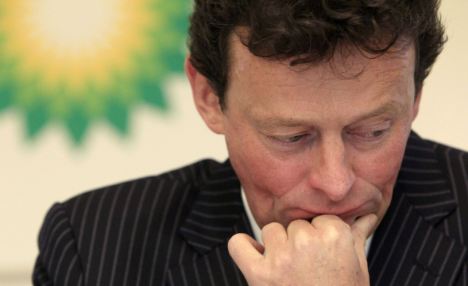
"A policeman kicks out your taillight and then writes you a ticket for a faulty taillight. A president announces a moratorium on offshore drilling as a sop to a section of his public that always opposes drilling, and to be seen "doing something." Then he turns around and demands that BP compensate those injured by the president's own careless action. Mr. Obama may not quite have committed the miracle of converting Tony Hayward into a sympathetic character, but voters who aren't keen on higher energy prices should be watching closely. Their taillight is ripe to be kicked out next."

Holman, come on man ! That is the analogy you chose ? It would be more appropriate to point out that the driver is kicking their own taillights out, not some third party cop. I suppose when the next ecological crisis happens you'll blame that one on our failure to keep up the "war on terror."

Wether you are a fan of President Obama or not perhaps if policies created higher energy prices people would start to use less fossil fuels and things like the BP disaster would be much less likely to occur. Has anyone thought about that ?