How Health Care Kills People

My Dad, William R. O'Rourke, Jr., passed away on Sunday, December 27, 2009; a day after his 72nd birthday (details here for friends and family). He suffered from CLL, a form of leukemia and had a tough battle during his final days. Dad was a terrific man. He had a distinguished career as a highly dedicated Air Force officer and pilot. He was a consultant to, ironically, the health care industry and served as a contract executive for a number of firms. He was a professor and intellectual while being a very down to earth and personable man and I loved him very much. Thanks for everything Dad - you will be missed.

We all have or had fathers and many of us are lucky enough to have received their support and love during our lives. Given this, what is painful to see first hand is the nature of the health care system they enter into when they are very ill. My experience personally during the past year is wrought with evidence of a dysfunctional system. When people get really sick, its broken nature becomes all the more apparent. This is not meant as an affront to the many professionals who attempted to provide care, nor is it about being able to afford care because Dad thankfully had the means. My sentiments are based on witnessing a SYSTEM that fails to provide quality because it is based on flawed economics.

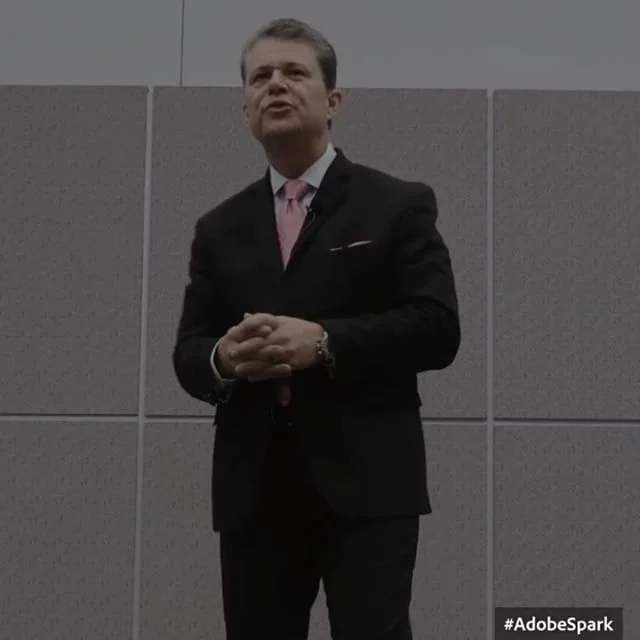
If you haven't read David Goldhill's New Yorker article, How American Health Care Killed My Father, you must. See some of his views above in the video. While my Dad was ill, I can promise you the quality of his life and his experience of care was woeful and would have been much better if the system were changed fundamentally. David's testimony above reflects many of the same things I experienced.  As a business executive like me, David began a personal exploration of a health-care industry that for years has delivered poor service and irregular quality at astonishingly high cost. It is a system that is not worth preserving in anything like its current form. And the health-care reform now being contemplated will not fix it. He has a radical solution to this agonizing problem.
Visual Search - Merging the Physical & Digital

The merging of the physical and digital worlds continues and Google Goggles is but another example of how the surge in mobile devices, GPS, Internet ubiquity, and more powerful search technologies are coming together to deliver new experiences and new business opportunities.

The implications are profound and can be humorously reflected upon by taking some time to watch this demo from Pattie Maes' MIT lab, which got a lot of buzz at TED a few years ago. Imagine "Minority Report" and then some.....

As Harmut Neven, the project manager of the product explains:

Imagine you’re a tourist and you arrive at this place and you want to know more about it. All you will have to do is take a picture of the sign. We send the information up to the server and we recognize this as the Santa Monica pier. The idea is you see something that interests you, you whip out your camera phone, take a picture of the object of interest, and this will trigger a Google search.

As the Android Guys among others, recently noted, Google is working on an incredible technology called “visual search” by tying the cameras in handsets to Google’s search engine. Imagine being able to take a picture of something and getting instant results back on your phone. See the Google explanation in the video below.

A recent  “Inside the Mind of Google” special, aired on CNBC, showed aspects of the development process. Before Goggles can hit the market, it will go through Google's testing process; requiring roughly 20,000 employees to “dog-food” the service and put it through the paces.

Below is an interesting video demonstration of Google Visual Search. Fascinating.....


We Need More & Better Leaders

Ironically, technical competencies are not the most valuable keys to success in light of the massive changes brought on by radical advances in technology, shifting demographics and the rise of competing global players. More than any single skill or means of adaptation that an individual or group will benefit from today is leadership. I think many might share the view that we certainly need more of it. At the center of most of our most fundamental challenges is the illusive stuff of leadership.

Leadership has been defined as a “process of social influence in which one person can enlist the aid and support of others in the accomplishment of a common task”. Alan Keith of Genentech exposed that, "Leadership is ultimately about creating a way for people to contribute to making something extraordinary happen." Effective leadership is a series of behaviors based on a belief system that successfully integrates and maximizes available resources within the internal and external environment for the attainment of organizational goals. So why don't we see more of it ?

The gulf of leadership is largely a function of people's fears of failure and need to avoid discomfort and pain. True leadership is founded on a unique combination of humility, drive, curiosity, integrity, emotional intelligence and conviction. In our culture today many see leadership as notoriety, extravagance and hubris, reflecting a poor understanding of what it is. Great leaders are teachers, not doers, and in a world where there is belief that organizational achievement is a reflection of a single individual, teaching isn't as valued.

Mark Sanborn shares an interesting view on the failures of leaders and his 6 warning signs. A brief video clip from one of his lectures on leadership is included above. Leadership is not reflective of a dictator or task master. It is more represented by Deming's 14 points. There are fundamental components of leadership which can be applied to you and your organization which anyone at any level can offer. Want to be more successful during the tidal wave of change ? Try and adopt and reinforce with others you work with the 6 principals outlined below.

1. Knowing and focusing on what is important

2. Understanding each players role

3. Driving out risk aversion and fear as key motivators

4. Being competent in what is done

5. Having integrity by actions not words

6. Really caring about what is done, yourself and others

Engaging Customers in 2010

As 2010 approaches, how will your organization effectively engage customers ? With only a few weeks left until the new year, many of us are thinking ahead and planning for 2010. With so much change, and uncertainty ahead what should we emphasize ? How should we approach our futures ?

Here are 6 key trends that should be at the center of your business development initiatives, including a terriffic 3 minute video to explain the trends in greater detail below. To have a successful 2010 will require a careful consideration and adoption of these important methods of customer engagement.

1. Social Media Will Continue to Rise in 2010 as Social Networks Converege.

2. The Key Channel for all Organizations is Online.

3. Video is the Most Effective Means of Engagement and the King of Content.

4. Identify and Focus on Networks Your Customers Use - Video, Mobile Apps & Social Networks

5. Develop a Communication Plan - Integrate With Marketing, Drive Traffic & Create Conversion Method.

6. Mobile Smart Apps are a Key Business Tool - Mobile Video Will Grow By 1/3 in 2010.

Computing and Tablet Technology

PC World's Ian Paul recent article asked, "2010: The Year of the Tablet Computer ?" . That is a good question Ian. RobiNZ CAD Blog asked in 2007 if 2008 was the year of the Tablet as well.  The theoretical applications of technologies as opposed to their practical adoption is something we all have witnessed. Given the increasing level of news and rumors around tablets, with dozens of new tablet devices planning to launch, one would wonder if the movement to wide spread adoption of tablets is here and why ?

Enter MIT's Press Journal's Designs Issues article "A Bitter Pill to Swallow: The Rise and Fall of the Tablet Computer", wherein Paul Atkison, who oversses 3D design for the School of Art and Design and Architecture at the University of Huddersfield, UK, correctly identifies how the anticipated adoption of tablet computing beginning as early as the 1980's. It was widely reported in 1991 that, "Nearly every major maker of computers has some type of pen-based machine in the works." Paul's article shares great insight into how factors can impede the adoption of technologies.

As Jasper's recent article "Why Tablet PC's Have Failed and Will Fail" attests that Atkison's work "presents an insightful, amusing and at times depressing analysis of the rise and fall of the tablet computer, from the early pen computing of the RAND tablet, via the Momenta Pentop, to the inevitable Apple Newton Messagepad." Jasper's right; its worth a read.

Contrary to Jasper's view its a new day, as technologies around tablets have advanced considerably during the past decade. The reason these new devices may become accepted and successful over the years relates to a few key drivers: High speed Internet ubiquity, consumer mobility adoption, and indeed as Paul has observed - functional design. If price can be market relevant there is a real opportunity for this product category to catch fire. Watch how new tablet technologies like Microsoft's rumored "Courier", which are going to be unveiled in the coming months ahead, can be relevant to your life. Another good reason to get excited about this emerging technology.