Are Health Clubs & Fitness Brands Paying Attention To The Emerging Connected Consumer ?


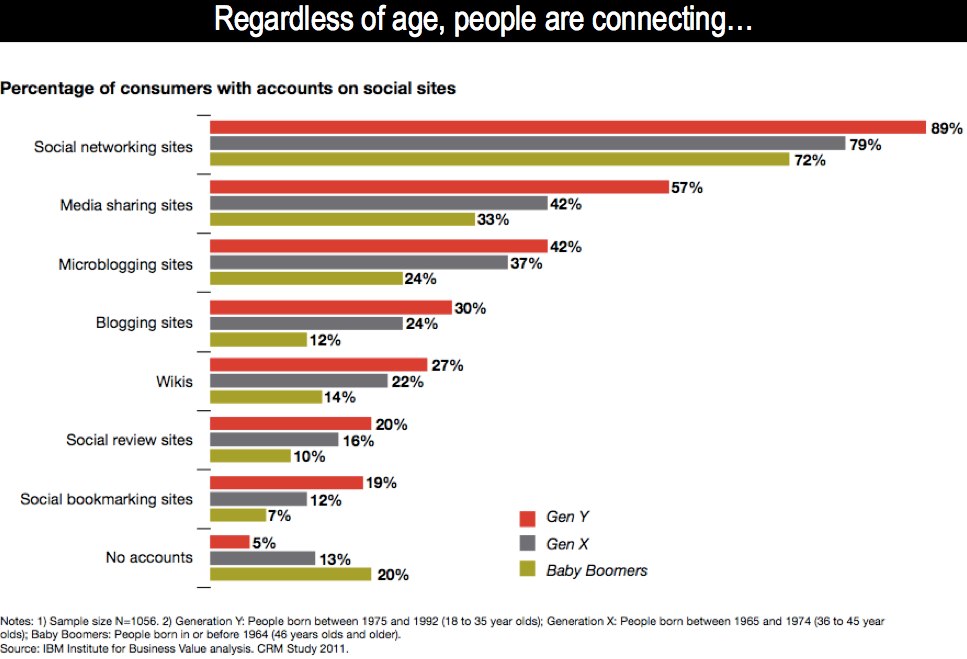
The fitness, health club and "wellness" industries are all going through massive change as the result of 3 drivers: advancing technologies, changing consumers and globalism. I've been paying close attention to consumer trends as of late, in case you haven't noticed (see my content on millennials). A recent post by Brian Solis raised a number of startling facts about Generation "C" - The Connected Consumer that brought this issue to the forefront of my mind again. Health Clubs and fitness brands in general better take note. Here is an excerpt from Brian's post :

No longer can we blame it on the youth. We must blame, if anything, the disruption of technology. Nowadays, age ain’t nothing but a number. It is how people embrace technology, from social networks to smartphones to intelligent appliances, that contributes to the digital lifestyle that is now synonymous with Gen-C.

Solis bases much of his post on Neilsen's recent report "Introducting Generation C: Americans 18-34 are the most connected". But as Solis and the Neilsen report show, the rise of the new connectedness is not exclusive to this age group, its impacting every generation and as a result every industry (like health clubs).

IBM's Report, The Connected Consumer Challenge, also speaks to these massive consumer shifts. As the introduction states, "Today’s electronics consumers expect much more than quality devices – they demand a quality experience. Their interest has shifted from the device itself to what they can do with the device." You can get the white paper here . Yet despite all of these reports I do not think a significant number of fitness facility or fitness brand players in general get it. Based on my first hand experience, many brands are still marketing like its 1990 or earlier. By the way its 2012....
Why ? I think a combination of factors answer this question. Owners and managers whose experiences are based on old modalities like membership sales being THE emphasis is one. Sorry, its a word of mouth world and if your fitness brand or club isn't delivering outstanding over the top experiences or worse bad experiences you are going to SUFFER. You can't sell your way out of bad programming or poor service. Another reason I think health clubs are failing to excel in this arena is the lack of cross polination from other industries who have done a better job adapting to this new paradigm. Regardless I have a message for leaders of health clubs and fitness brands in general. Here is the bottom line (consistent with my recent quotes on twitter from @Garyvee about business and advertising in general) :

"If you do not care about your end user immensely, especially in the next few years, your brand will die." (BTW these consumers are increasingly connected consumers)

"I'm very passionate about traditional media. I don't think it's dead. I just think it's overpriced." (Perhaps you should stop doing so much direct mail and try something different)

And for those of you who don't believe the Connected Consumer should be a major part of your business thinking I have this last quote just for you from @Garyvee:

"There were people walking around saying the internet was a fad, and weren't joking. They won't admit it now."  (Don't be one of those people who did not see it coming).

So tell me, Bryan O'Rourke, what do you about Generation "C", the "Connecter Consumer" ? Am I wrong ? Do you think Health Clubs and fitness brands have changed there marketing in response to this expanding consumer group ? I don't think that's happened enough and it worries me. What do you think ?

About the author:

Bryan O’Rourke is a health club industry expert, technologist, financier, and shareholder and executive in several fitness companies. He consults with global brands, serves as a member of the GGFA Think Tank is Chair of the Medical Fitness Association’s Education Committee, is President of the Fitness Industry Technology Council and a partner in Fitmarc, Integerus, Fitsomo and the Flywheel Group. To learn more contact Bryan here today .

What's Happening With Smartphones And The Fitness And Health Club Business

Late last year reporter Catherine Saint Louis , did a great story in the NYT titled Cellphones Test Strength of Gym Rules . Catherine kindly interviewed me for the story which basically made the point that Smartphones are creating a challenges for health club owners and operators. Here's a quote:

Gym owners say their members are dividing into two camps, those who can’t stand cellphones on the gym floor and those who see their phones as indispensable to their workouts as a bottle of water.

Its become a lot harder for operators to deal with the many issues surrounding new smartphone technology. Privacy and security concerns along with the division among health club members has created a real rift on this topic. Now comes this recent research: not surprisingly, more consumers are using smartphones to stay connected while exercising, according to a recent survey by the firm Lab42 . Check oput the cool infographic below.

The market research firm found that 51% of consumers use smartphones during workouts, with (33%) checking email or (43%) tracking their pace . 91% Listen to music on a mobile device during a workout (91%). The study focused on 500 social media users who place a high emphasis on health and exercising.

Respondents (33%) said they use apps to track fitness and food regimens, with 31% tracking similarly on websites. Many are also sharing their fitness progress with others (75%); Facebook is the most popular platform to do so. The research found that 74% of consumers believe technology has made a positive impact in improving their weight loss plans while increasing motivation (72%) to keep going.

What this means, in my view, is that increasing numbers of tech oriented Millennial members are bringing along there way of doing things. You might want to check out this post on the topic or catch up on some of my recent free research on Millennials Impact On The Fitness Industry, which identifies some interesting and important trends. The implications to business models and fitness brands is interesting: think Amazon versus Burberry.

It will be interesting to see how health club owners and operators continue to deal with this trend and how business models either embrace it or attempt to quell it. Tell me, Bryan O'Rourke, what do you think about the trend of smartphone use during exercise ? Is it here to stay and will it grow ?

About the author:

Bryan O’Rourke is a health club industry expert, technologist, financier, and shareholder and executive in several fitness companies. He consults with global brands, serves as a member of the GGFA Think Tank is Chair of the Medical Fitness Association’s Education Committee, is President of the Fitness Industry Technology Council and a partner in Fitmarc, Integerus, Fitsomo and the Flywheel Group. To learn more contact Bryan here today .


Technology - A New Wave Of Interesting Applications & Devices

If you don't have the time to read just check out the video below on Leap Motion (In less than a week, the video introducing Leap has received a staggering 3.6 million + views on YouTube.) Why ? I've written for some time on the subject of the merging of the physical and digital worlds and how technologies are creating a new realm of consumer possibilities and business models. The health club and fitness and wellness industries will be impacted by these technologies for sure. Leap Motion is another example of the possibilities for technology to revolutionize fitness.

While it might seem like a fad, this soon to be released $70 device, Leap Motion, connects via USB and is 200 times more sensitive than Microsoft's Kinect. The business-card sized camera holder, can discern all 10 of your fingers individually. This detailed scanning lets you perform actions like pinch-to-zoom, or enables zeroing in on fine details in a drawing app. With some advancement the device could even be used to assess proper form for fitness professionals or clients, among many other applications.

What do you think about the Leap Motion ? Please share your thoughts with me, Bryan O'Rourke and thanks for reading the post.

About the author:

Bryan O’Rourke is a health club industry expert, technologist, financier, and shareholder and executive in several fitness companies. He consults with global brands, serves as a member of the GGFA Think Tank is Chair of the Medical Fitness Association’s Education Committee, is President of the Fitness Industry Technology Council and a partner in Fitmarc, Integerus, Fitsomo and the Flywheel Group. To learn more contact Bryan here today .



How Much "Innovation" Is REALLY Going On ?

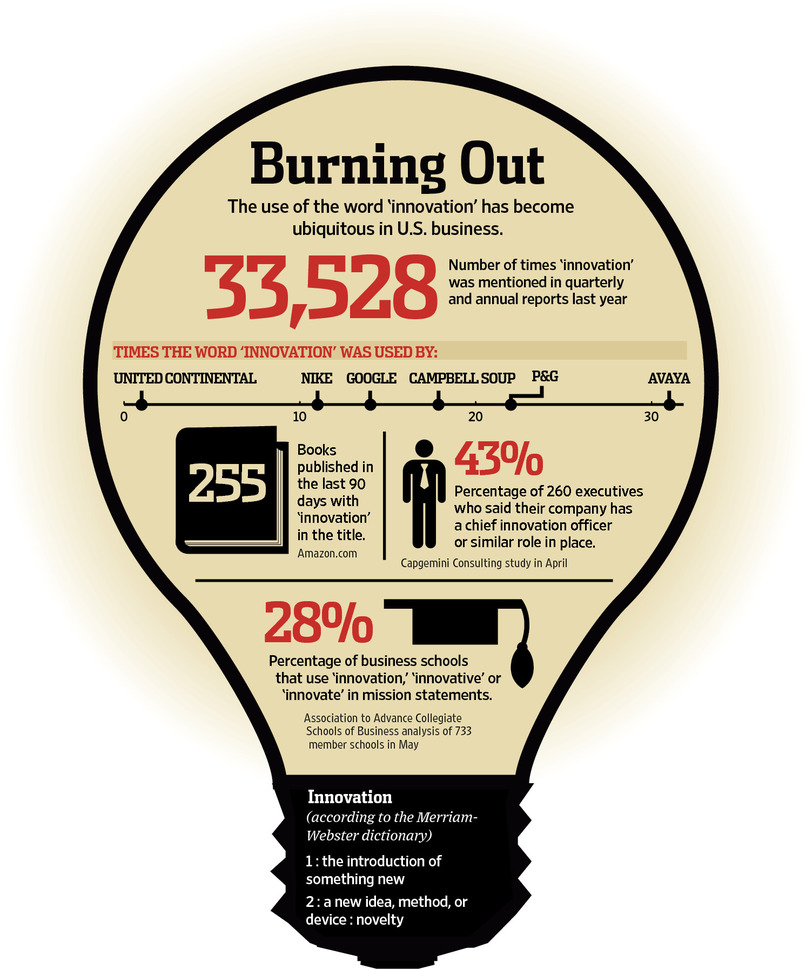
The introduction of something NEW, now there's a novel idea. When I read the WSJ article by Leslie Kwoh, "You Call That Innovation ? Companies Love to Say They Innovate, But the Term Has Begun to Lose Meaning"; it struck a cord. As she says, "innovation is in danger of becoming a cliche', if it isn't one already." Her article made me think because a successfull Linkedin Group I created and manage is titled, "Fitness and Wellness Innovation"; Now I'm considering a name change.

Innovation, based in the Latin term innovatus, meaning renewal or change, has become divorced from its essence in many of today's popular organizational pursuits. Many leaders use the term to describe activities which are hardly innovative at all. I know of one CEO in particular who has used the term incessantly during talks over the past two years while their organization hardly innovated anything at all; it's embarrassing. Why ?

The efforts of many in industries and organizations have more to do with self preservation than addressing a future that isn't kind to past abilities or thinking. I guess if people say the term innovation enough they might believe they're actually innovating. While any change could be technically termed innovation, the reality is that real innovation is much more - its disruptive and disruption is rarely born from parents of the status quo. Why is this important ? Industries are changing and very quickly, so if you're not on top of that change you are likely going to become extinct. Don't believe me ? Check this out.

Like many, the fitness and wellness industries reflect a culture steeped in protecting the past. As I wrote in an article in 2011, How Does The Fitness Industry Change Its Mindset ? , :

...while the fitness and wellness industry has grown over the past quarter century, obesity and health quality in the developed world have not improved.  Many argue they've gotten worse. The fitness industry still serves about 15% of the adult population while failing to broaden its appeal to the not yet fit. Something is broken because things have not improved and I fear the industry is failing to reach its promise and as a result, things need to change - but how ?

Innovation; as Vijay Govindarajan, Professor at the Tucks School of Business at Dartmouth and co-author of 10 Rules for Strategic Innovators , is about 2 major things. First, leaders must accept things ARE changing and figure out how to adapt accordingly. Second, leaders must understand change is NOT a technical problem its a MINDSET problem. Therefore to enable a business or even an industry to adapt one must introduce NEW mindsets.

Dr. Govindarajan is right and the problem for leaders in any industry when it comes to "Innovation" is that it is often white wash because really innovating means people at the top might have to admit they don't know the answer and even that they might be or have been WRONG. As Kwoh points out when quoting Harvard professor and author Clayton Christensen,

"Most companies say they're innovative in the hope they can somehow con investors into thinking there is growth when there isn't." WOW, but SO true.

If the fitness, health club and wellness industries and organizations participating within these industries want to innovate, they must do 2 things: admit things are REALLY changing and accept enduring the change requires changing their MINDSETS. That requires opening the door to new voices and new leadership.

So the next time you hear someone use the term "Innovate" listen up and question if it is really innovation at all. Are you being "conned" as Christensen says, or are they part of a new order of things ?

What do you think about the term innovation ? Please share your thoughts with me, Bryan O'Rourke and thanks for reading the post.

About the author:

Bryan O’Rourke is a health club industry expert, technologist, financier, and shareholder and executive in several fitness companies. He consults with global brands, serves as a member of the GGFA Think Tank is Chair of the Medical Fitness Association’s Education Committee, is President of the Fitness Industry Technology Council and a partner in Fitmarc, Integerus, Fitsomo and the Flywheel Group. To learn more contact Bryan here today .
Facebook's $1 Billion Acquisition Of Instagram - How Does Fitness Relate ?

I know, I know...I can almost read the minds of some of the folks who will read this article. "Gee Bryan, give it up already with this creative disruption stuff....Picture taking has nothing to do with the health club or fitness industry. Enough !" OK, I'll try not to beat the "dead horse" of disruption too hard again, be it with examples of Best Buy, Sears, or Borders Books . In this case, however, I could not help but serve up the interesting tale of Kodak and Instagram in light of Facebook's announcement that they'll acquire the Instagram business for $1 billion dollars. I thought an article by Lance Ulanoff titled, "Does Instagram Owe Kodak A Billion Dollar Thanks?", included some pretty remarkable insights that can apply to the health club and fitness space today. Here's a slice of Mr. Ulanoff's observations:

As Kodak works its way out of Chapter 11, it’s obvious that the company held onto traditional photography as the centerpiece of its business for, perhaps, a little too long. Yes, it was one of the first to introduce a digital camera, but Kodak and its customers seemed to believe traditional film photography would never die. Too bad Kodak couldn’t have seen as far ahead as Eastman once was. Maybe it could’ve come up with the idea of Instagram and today Facebook would be buying it, instead.

So what does the Instagram - Facebook deal mean to the Health Club and Fitness Business ? It means that times are really changing and fast. With Kodak in bankruptcy and the Instagram founders looking towards a billion dollar payday the future is clearly digital, mobile and innovative. No matter the industry, if you aren't accepting these dynamics as fact, you're going to clearly miss the boat. Many traditional fitness, wellness and health club business models aren't keeping up. Some people might think that like Kodak, they are failing to see the future.

So tell me Bryan O'Rourke, do you think the Instagram - Facebook deal has any lesson to teach the health club and fitness industry ? I'd love your opinion.

About the author:

Bryan O’Rourke is a health club industry expert, technologist, financier, and shareholder and executive in several fitness companies. He consults with global brands, serves as a member of the GGFA Think Tank is Chair of the Medical Fitness Association’s Education Committee, is President of the Fitness Industry Technology Council and a partner in Fitmarc, Integerus, Fitsomo and the Flywheel Group. To learn more contact Bryan here today .