Entrepreneur - Be Careful Using The Term

Before I start I'll ask, "Does anyone think this kid looks like me ?" Well at one point he might have, but things change. I'm not so cute anymore. What does this have to do with using the term Entrepreneur ? Well as cute as this little one can be, he also can throw tantrums and display bad behavior. After reading Isaacson's recent book on Steve Jobs and given other experiences I'll share, I wanted to address what has become an important question in my mind; "do successful entrepreneurs need to be jerks?" I don't think so.

Entrepreneur is a term applied to one willing to help launch a new venture and accept full responsibility for the outcome. The use of the term has soared in the past few decades with the rise of the celebrity entrepreneur and their associated rise to riches and fame. I've had my dealings with several of them. I'm not naming names because I don't want to seem like a kiss ass to those I admire or point out the few whom I dislike.

I think the term "Entrepreneur" is over used and misunderstood. There is something really important to note about this, especially regarding the high profile ones of today. You see all "entrepreneurs" are not the same and regrettably the title has been used by some if not many as an excuse for a variety of bad behaviors. Like the cute little guy, some are good at being very very bad.

Most agree one should never act unethically, deceitfully or abusively no matter what greater purpose is believed to exist. Many self proclaimed entrepreneurs, however do because they don't think rules apply to them. How many actually read the Isaacson book? Here are 16 examples of Jobs being a jerk. People from Madoff to Hitler could be characterized as an entrepreneur at some point and I don't think they were meant to be included under the definition. Unfortunately popular thinking about the celebrity “entrepreneur” today often promotes the importance of ego driven people valued for fame, wealth or genius with few ethics. They might take the definition and use it to their benefit. This is the antithesis of many quality entrepreneurs as some are quite employable, unspoiled and don't necessarily see their world dominated by rejection or denial. In fact some of the most humble people are social entrepreneurs changing the world.

The disturbing and irritating behavior exhibited by some entrepreneurs may be innocent in some visionaries minds while criminal in reality. The visions they promote are sometimes delusions of grandeur not purposeful innovation. While success can be achieved even by those being bad, often its through taking credit for other's efforts and even worse by fraud. Recent history bares this out. See lies entrepreneurs tell. It is rare, however, to see organizations establish sustained success, because it is much harder to achieve. It requires many stakeholders working together as you know; not one individual ruthlessly driving the train, particularly when and if they're wrong .

Characterizing entrepreneurs in the modern sense leaves out the altruistic, or those who avoid conflict and disturbing actions, or put others first and their fame, and ego last. You see the most successful ones are rarely if ever on the front page of magazines, although they arguably have the biggest impacts. That most don’t know Dennis Ritchie is a case in point; he died the same month as Steve Jobs and hardly anyone knew, yet his impact on the world of technology was arguably more profound than Apple's founder. I don’t think the fact that Dennis was unknown, low key or did not feel as though he was in conflict with the world makes his contributions less valuable. He was just a great technologist and software genius.

The world needs to oppose the "entrepreneur" who rationalizes bad behavior because they know what's best for everyone else. These types are at the root of the biggest problems in society today. It reflects "ends justifies the means" thinking creating problems from the recent financial crisis and BP oil spill to wars and other disasters that ordinary people are left to clean up. It sometimes leads to short cuts, the convenient dismissals of prior commitments or the fudging of truth; these among other behaviors that destroy organizations large and small everyday. This type of "entrepreneur" is often too proud and self serving to admit they are in over their heads and to selfish to turn over the reins. It would require admitting that they don't have all the answers or result in dire consequences from being found out. After all problems are never their fault , its everyone else who just gets in their way.

Their accomplices, people who know better and stand bye silently because they don't have the gumption to speak up, think “who cares”, no one will listen anyway. It reminds me of Frederick from the Woody Allen movie Hannah and Her Sisters when he says; "You missed a very dull TV show on Auschwitz. More gruesome film clips and more puzzled intellectuals declaring their mystification over the systematic murder of millions. The reason they can never answer the question ‘How could it possibly happen’ is that it's the wrong question. Given what people are, the question is, why doesn't is happen more often?". Sadly it happens everyday and its up to good people to stand up, point it out and say something, even if its about an “entrepreneur.”

The bottom line is that all entrepreneurs are the same. Who they are and their experiences can vary widely. Some are good,  others evil and some in between. In the end they really are just like everyone else so maybe we shouldn’t give people with the title such a wide row to mow. Being one is never an excuse for being a jerk.

In light of this post I share these articles. One from Maccoby in HBR, "Narcissistic Leaders: The Incredible Pros and The Inevitable Cons" which explains a lot about some "entrepreneurs". The other article is from Anthony in HBR, "Don't Confuse Passion With Competence"  . The road to hell is always paved with good intentions and to the extent anyone is asking for sympathy for the poor entrepreneur, well I say do something more useful and “get off the cross, the world needs the wood.”

About the author:

Bryan O’Rourke is a health club industry expert, technologist, financier, and shareholder and executive in several fitness companies. He consults with numerous global brands, serves as a member of the GGFA Think Tank is Chair of the Medical Fitness Association’s Education Committee and a partner in the Flywheel Group. To learn more contact Bryan here today .
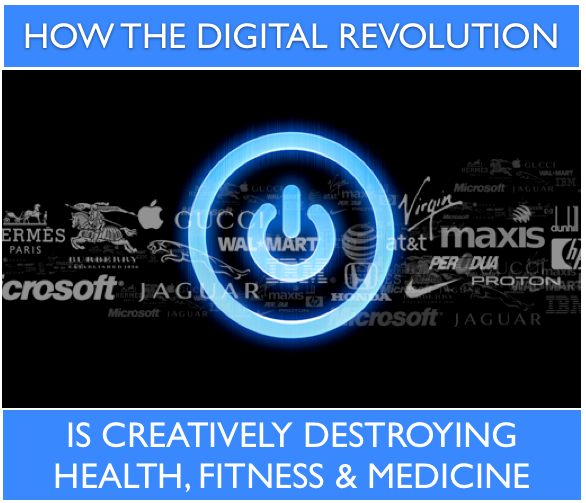
Why Health & Fitness Is Being Creatively Destroyed

When the rules of the game change what the defenders of the status quo think doesn't matter as much as what customers do. This is how disruption happens and is why the present state of health and fitness, even of medicine in general, is about to shift: radically. Just look back at the music industry during the past decade, enough said. Think that comparison isn't relevant ? Think again.

Originally derived from Marxist economic theory, of all things, and later popularized by Joseph Schumpeter, Creative Destruction is the description of a "process of industrial mutation that incessantly revolutionizes the economic structure from within, incessantly destroying the old one, incessantly creating a new one."

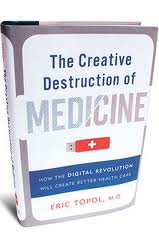
In a recent post I proposed that the extant health club industry had reached maturity, by addressing the underlying state of the business and S curve theory. Now I'd like to share the hand in glove idea of Creative Destruction which was raised recently by Dr. Eric Topol in his new book, "The Creative Destruction of Medicine". Here's one of Dr. Topol's recent quotes on the book:

“It is an expression of a consumer health revolution that is just budding,” Topol said. “It’s in its nascent phase, but it is happening right now. I think the consumer-savvy base is waking up. There is a reset here. This digitization of human beings will make a parody out of doctor knows best. We need partnerships. We need physicians working and guiding individuals. Each individual will have a much more precise view of himself or herself biologically, physiologically, anatomically, to work in partnership with physicians.”

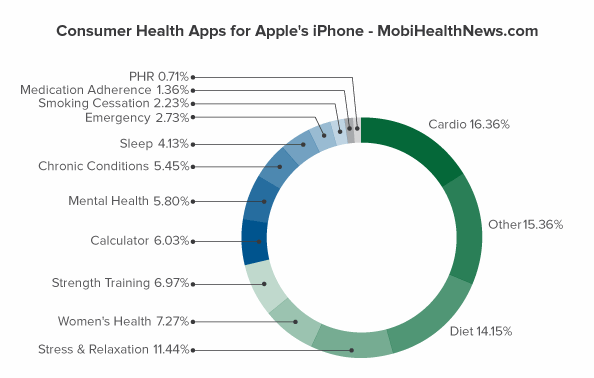
When Topol says that the revolution of medical care "will make a parody out of doctor knows best" I think about the bricks and mortar health club business. Today there are nearly 13,000 consumer health apps in the app store. Inexpensive tools are going to increasingly be available to help people ascertain their health and wellness and this will result in a reengineering of the delivery of all health, fitness and wellness. It will also have a huge impact on business models. As Topol explains:

"It won’t start with physicians.... it takes about 17 years for a new medical technology to go from being accepted to being a part of routine care. We can’t wait 17 years. So, we can’t let the medical community drive it.”

As with the fitness industry where extant participants are slow to adopt, changing consumers, particularly ones more open to technological tools, are going to drive adoption whether the industry likes it or not. This will create great opportunities for some and extinction for others.

So what do you think ? Do you agree with Dr. Tobol's thinking and do you believe it relevant to both the medical and fitness industries ? Please contact me Bryan O'Rourke and share your views. I'd love to hear from you.

About the author:

Bryan O’Rourke is a health club industry expert, technologist, financier, and shareholder and executive in several fitness companies. He consults with numerous global brands, serves as a member of the GGFA Think Tank, is Chair of the Medical Fitness Association’s Education Committee and a partner in the Flywheel Group. To learn more contact Bryan here today .
 

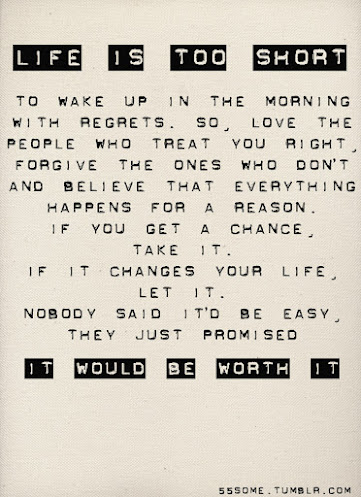
Something To Keep In Mind - Life Is Short

I like this. Life is too short. Do you agree ? Thanks to my family and friends for everything. I've been lucky and fortunate.

About the author:

Bryan O’Rourke is a health club industry expert, technologist, financier, and shareholder and executive in several fitness companies. He consults with numerous global brands, serves as a member of the GGFA Think Tank, is Chair of the Medical Fitness Association’s Education Committee and a partner in the Flywheel Group. To learn more contact Bryan here today .
Why The Fitness Technology Council Is So Important To The Fitness Industry

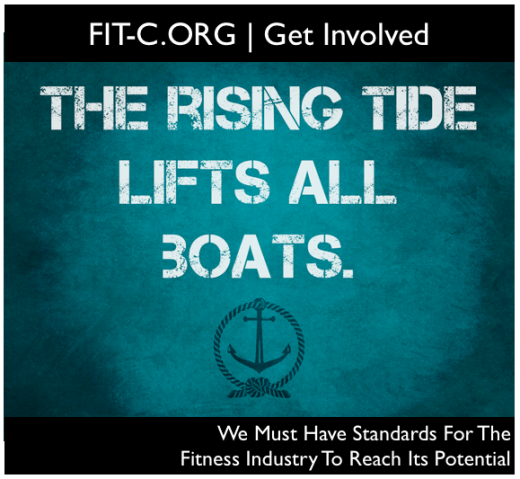
Getting competitors to work together is hard. However, a lack of collaboration and the failure to create standards can result in missed opportunities for all. You know the adage, "rising tides lift all boats". The health club and fitness industry yearns for the potential of wide spread exercise prescription, physician referrals and truly integrated wellness which could lead to new business models and a greater impact on the health of our society in the future. Unfortunately without more standards that ideal future is going to be harder to achieve.

The importance of standards can be illustrated easily by looking at other industries. For example, prior to the advent of the nearly ubiquitous Internet of today, a few people in the computer industry got together to establish something called a Wi-Fi standard. The Wi-Fi standard (also known as IEEE 802.11) was created through the collaboration of several big  technology companies, including 3Com, Cisco, Nokia, Apple, and Microsoft. It took only a few years for Wi-Fi to become the biggest standard in wireless communications, and its domination continues to this day. The collaboration of competitors to create a standard makes a fine example of how technology companies can work together to create new markets, provide new services to customers, and still put plenty of money in the bank. Without the standard, the explosion of mobile devices, PC's, tablets and Internet adoption in general would have been severely curtailed.

On Wednesday February 22, 2012, FIT-C will offer a free webinar on its mission and share more details about how players in the fitness and health club business can come together to help create a brighter future for all participants. I hope you will click on the image below and register. Let's work together to make the future of our industry better for everyone.

About the author:

Bryan O’Rourke is a health club industry expert, technologist, financier, and shareholder and executive in several fitness companies. He consults with numerous global brands, serves as a member of the GGFA Think Tank is Chair of the Medical Fitness Association’s Education Committee and a partner in the Flywheel Group. To learn more contact Bryan here today .
The New Consumer - How Millennials Will Impact The Fitness Industry

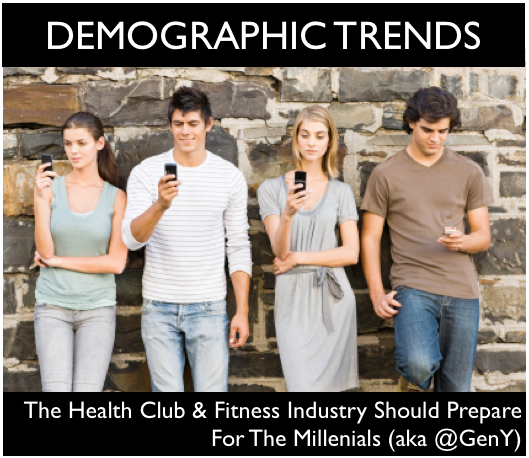
I write about how industries are being turned on their heads through three key drivers: advancing technologies, globalism and shifting demographics. Leaders in the fitness and health club industry have focused a lot on shifting demographics, namely the baby boomers. However, a potentially more impactful group is looming out there. The Millennials, also known as Generation Y or the Echo Boomers, comprise ages between 18-30. Some argue this age range a bit depending on who you talk to. I've got two children (almost 3) who fit the mold and believe me when I tell you, thier belief systems and behaviors are going to have a big impact on all businesses in the coming decade including health clubs and the fitness industry in general. What will it mean ? In a nutshell it means you better evaluate changing how your business operates to meet their needs.

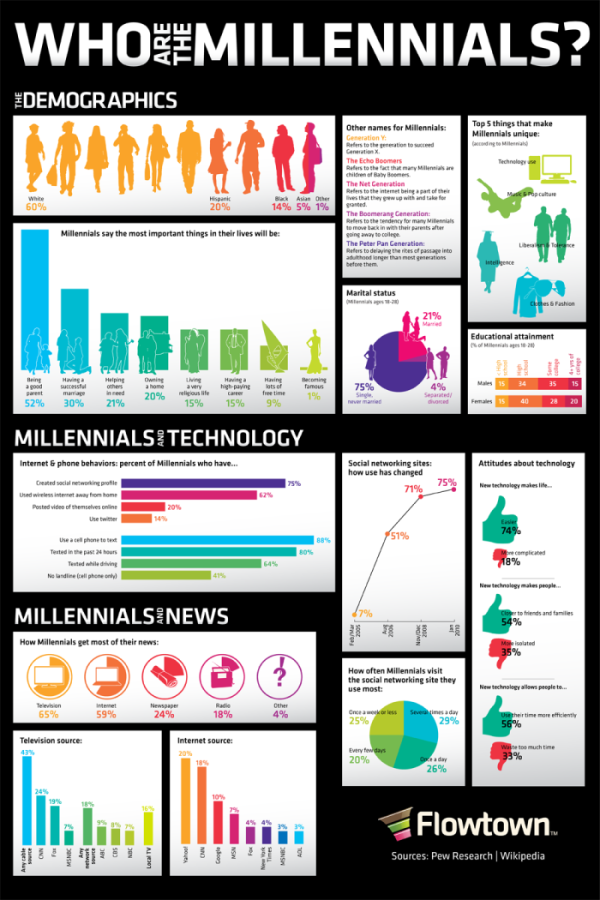
As the infographic below reflects, Millennials are very in tune with technology. They see technology as making their lives better and more convenient. Therefore things like scheduling online, tweeting a brand or transacting business using a smartphone is what these customers are going to expect to be able to do with any and all brands. You might want to check out the McCann Worldgroup global study, the Truth About Youth, to learn more about the common views of global Millennials.

What is incredible about this demographic group is its massive size. This is the largest demographic group since 1960 to emerge and there are over 80 million of them in the US alone. Here are 47 interesting facts about this group, including that 80% had used an online service in the past 30 days.

So tell me Bryan O'Rourke, what do you see happening as the result of the Millennials increasing influence ? What impact will it have on the fitness and health club industry ? I think a lot as more of these folks enter affluency and demand that they engage fitness brands and clubs in the physical and digital space.

About the author:

Bryan O’Rourke is a health club industry expert, technologist, financier, and shareholder and executive in several fitness companies. He consults with numerous global brands, serves as a member of the GGFA Think Tank is Chair of the Medical Fitness Association’s Education Committee and a partner in the Flywheel Group. To learn more contact Bryan here today .