Hulu's Business Model Dilema

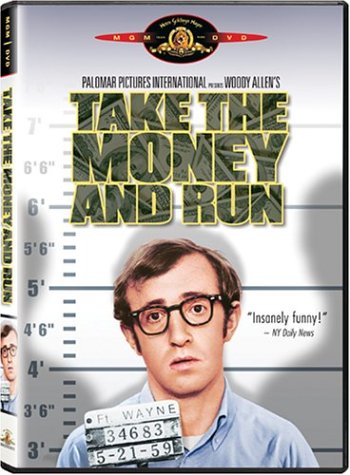
Hulu, yet another example of an industry trying its best to maintain its business model with minmal innovation in the face of a rapidly changing world. "Remember that Woody Allen movie "Take the Money and Run" where Woody's character keeps getting his glasses broken by bullies and finally in one scene when he is confronted again he takes them off himself and smashes them? Well, that's the kind of logic the industry used on Hulu." This according to Joe Flint of the LA Times yesterday morning and Joe's right...But there's more.

As the LA Times reported, Hulu, the popular online site for watching television shows, is preparing to execute the toughest maneuver in digital media: moving from free to pay. The service will begin testing a subscription offering as soon as May 24, according to people with knowledge of the plans.

Under the proposal, Hulu would continue to provide for free the five most recent episodes of shows such as Fox's " Glee," ABC's "Modern Family" and NBC's "Saturday Night Live." But viewers who want to see additional episodes would pay $9.95 a month to access a more comprehensive selection, called Hulu Plus, these people said.

Its important to remember something when you consider Hulu , its owned by a consortium of content creators, News Corp., NBC Universal and Walt Disney Co., who want to preserve the cable and satellite fees that pay for the high cost of TV production. In other words these guys want to make certain they continue to be paid vast sums of money for what they make. They don't want their business model to change; its too profitable. Therein lies a bit of Joe's analogy and therein lies the pickle Hulu is in. They have to control the distribution channel to realize their goals.

According to the LA Times story on the topic "Television executives don't want to suffer the same fate as music industry or newspapers, which saw revenues plummet after users flocked to free access to songs, stories and classified ads online. Already, Hulu fans are decrying the proposal and threatening to turn to Internet pirate sites to watch their favorite shows."

With all of the alternate means of distribution emerging, the days of owning both content creation and its distribution will become harder, without of course sacrificing FAT margins. The existing scheme of content creators owning distribution channels should be discouraged to increase competition and improve quality and diversity. In the end the consumer will decide, no matter the media industry's continued manipulation of the government to protect its interests (watch Lessig). To this point read  the "Economics of Free" and "Kindle vs. Publishers, the Wrong Debate".

The essence is competition and value. Competition for content and the value extracted by organizations who are mainly middle men; intermediaries between creation and the utlimate consumer is coming under attack in all industries. As I wrote in Kindle vs. Publishers, the Wrong Debate, "Its all about economics. In a business where barriers to entry used to be up front costs in promotion, development, distribution and production, new business models have emerged to render the past value of publishers increasingly mute." There is a reason Apple is one of the largest distributors of content in the world now - economics.

Many people believe that "The challenge will be whether Hulu Plus has enough ‘added value' so that consumers perceive that it's worth the price," said Michael McGuire, media analyst with research firm Gartner. While true that is really a near term problem. The challenge for the owners of Hulu is wether they can keep extracting their margins for what they do given the rise of so may distribution and content alternatives ala Netflix and others.


Apple Posts Record Profits as iPhone Sales Surge

Mobile devices continue their surge and Apple's vision of the rapid emergence of the mobile environment for computing is paying off. iPhone sales doubled to nearly 7 million units in Q2 - largely from internal sales improvements. Mac sales also improved. As the WSJ noted Apple's Earnings Call Reporting a "Staggering" jump in iPhone sales. Here's an excerpt:

The results were well above Wall Street expectations; analysts had expected a rise of about 37%, compared with earnings a year ago adjusted for an accounting change.

“We’re thrilled to report our best non-holiday quarter ever,” said Chief Executive Steve Jobs in the company’s release.

On its earnings call, expect Apple to give more details on sales of iPhones and Macs, as well as its newest product, the iPad, which launched this spring. Apple Analysts also will be looking for information on Apple’s guidance for the next quarter. Apple said it expects fiscal third-quarter earnings of $2.28 to $2.39 a share on revenue of $13 billion to $13.4 billion, but the company is typically conservative in its forecasts.

Here is the recording of the 2010 Q2 earnings report. Watch the video overview from WSJ below.

CK Prahalad - Visionary of Global Management Passes at 68

On occassion we are fortunate and benefit from the insights and work of special people. When they pass it is noteworthy and sad. Such is the case with the distringuished professor CK Prahalad, who was internationally recognized for his research in corporate strategy and the best ways top management can navigate the often-complex waters of running large, multinational corporations.

As a Paul and Ruth McCracken Distinguished University Professor of Strategy in the Ross School of Business, Prahalad was a well-respected and deeply admired member of the community, both as an expert in his field and as a teacher. In 2009, he received the Pravasi Bharatiya Samman — an award given by the president of India to men and women who make exceptional and praiseworthy contributions in their respective fields. In the same year, the Indian government honored Prahalad with the Padma Bushan — the third highest civilian award in India — for his distinguished service to the nation. The Times of the United Kindom also named Prahalad the most influential business thinker on its The Thinkers 50 List in October 2009.

For many reasons this Harvard professor and author attained notarity. Among many publications, he had several international bestselling books, including “Competing for the Future,” “The Future of Competition” and “The Fortune at the Bottom of the Pyramid: Eradicating Poverty through Profits.” A visionary who saw the unique contributions the emerging global middle class is and will have on the world, he once was quoted as saying:

If we stop thinking of the poor as victims or as a burden and start recognizing them as resilient and creative entrepreneurs and value-conscious consumers, a whole new world of opportunity will open up.


Are Companies "Slowly" Adopting Cloud Computing ? NYT Says Yes

Brad Stone and Ashlee Vance recently wrote in the NYT that companies are "Slowly" Joining the Cloud. They're joining alright, but probably more quickly than people might realize. This is particularly true when one realizes how fast startups and smaller more agile firms are jumping onto the Cloud bandwagon because it just doesn't make any sense not to. Here is a direct quote from the article.

When given a clean slate, many new companies have chosen a full embrace of the cloud model, figuring the technology industry has matured to the point were these types of services make basic business sense. For example, Arista Networks, a five-year-old company that makes networking equipment, runs its sales software with a cloud software company called NetSuite, its corporate e-mail on Google Apps, and other Web infrastructure with Amazon.com.

“It’s so much easier,” said Andreas von Bechtolsheim, the co-founder Arista and Sun Microsystems and one of earliest investors in Google and VMware. “For a new company like us, you would just never build a traditional data center anymore.”

And this is where the real story lies. You see while larger organizations might be wary of the Cloud, each day they fail to shift their IT infrastructure to the Cloud is a day the competition is gaining a leg. Ironically, the ROI for larger corporations adopting the cloud is much higher than for smaller ones from a strictly cost benefit standpoint. From a strategic point of view the ROI is even higher.

Yes companies are adopting the Cloud and for the ones doing it slowly or not doing it at all, they best reconsider their long term viability.


Google Will Make Us Smarter - Not Stupid

A recent Pew Internet research project on the Future of the Internet included a survey of nearly 900 Internet stakeholders to reveal perspectives on the way the Internet is affecting human intelligence and the ways that information is being shared and rendered.

The web-based survey gathered opinions from prominent scientists, business leaders, consultants, writers and technology developers. It is the fourth in a series of Internet expert studies conducted by the Imagining the Internet Center at Elon University and the Pew Research Center’s Internet & American Life Project. The report addresses thought on the following issues:

Will Google make us stupid?
Will the internet enhance or detract from reading, writing, and rendering of knowledge?
Is the next wave of innovation in technology, gadgets, and applications pretty clear now, or will the most interesting developments between now and 2020 come “out of the blue”?
Will the end-to-end principle of the internet still prevail in 10 years, or will there be more control of access to information?
Will it be possible to be anonymous online or not by the end of the decade?

“Three out of four experts said our use of the Internet enhances and augments human intelligence, and two-thirds said use of the Internet has improved reading, writing and rendering of knowledge,” said Janna Anderson, study co-author and director of the Imagining the Internet Center. “There are still many people, however, who are critics of the impact of Google, Wikipedia and other online tools.” Read more...

The survey results are based on a non-random online sample of 895 internet experts and other internet users, recruited via email invitation, Twitter or Facebook from the Pew Research Center’s Internet & American Life Project and Elon University.  Since the data are based on a non-random sample, a margin of error cannot be computed, and the results are not projectable to any population other than the experts in this sample.

Watch Vint Cerf of Google talk about the future of the Internet below.