The Low Cost Model - Disruption in the Fitness Industry

At $20 Billion in annual revenues the US health club industry, like most bricks and mortar centric business models, is coming under increasing financial and market pressures. Rising costs and consumers being offered increasingly low cost alternatives, either via new bricks and mortar models or alternatively with the deployment of digital tools to deliver value at much lower price points, are creating a ripe field for disruption.

Many players in the fitness industry are at great risk and the opportunities for those with vision are enormous. Yesterday I witnessed yet another innovation that speaks to this future learning of Pocket Innovation, watch the demo . This morning when I read Ray Algar's tweet, wherein he shared his recent presentation below, I was only further convinced of the future. Ray is a strategic marketing expert who advises the fitness industry. We share very similar views on the future of the fitness industry. although his presentation does not touch upon the new paradigm of wellness - another topic. Here is an excerpt from his web site:

I was in London last night at a Leisure Property Forum event to present my thoughts on the low-cost (budget) gym trend that is now gaining momentum in the UK. This presentation looks at some of the key 'drivers' of the trend and also case studies the growth of McFit in Germany. My thanks to Niels Gronau, a member of the Deloite Corporate Finance team at Deloitte in Germany, who helped with background data on McFit.

John Treharne, CEO of The Gym Group was also there to discuss the company's strategy. John was fresh from this week's opening of their new Manchester club, which means they now have five clubs open, with Leicester due to open in the first quarter of 2010. The Gym Group has an ambition to open a further 10-15 clubs during 2010.

In all industries the former 4 P's of marketing (price, place, product & promotion) are being replaced, in order, with new value exchanges, the merger of the physical and digital, the experience and engagement. Additionally, by leveraging technologies fewer people can deliver more engagement and greater value. If your fitness organization is not adopting these strategic orientations in its business model you will be in for a rough future. Afterall, why pay a monthly fee to use a treadmill on occassion? This is the question more and more consumers are starting to ask, given all the options available. and what is happneing in the market It is also why cancellations for the industry on an annual basis amount to nearly 40% of the customers.
 

A Doctrine for Change - To Lessig Again

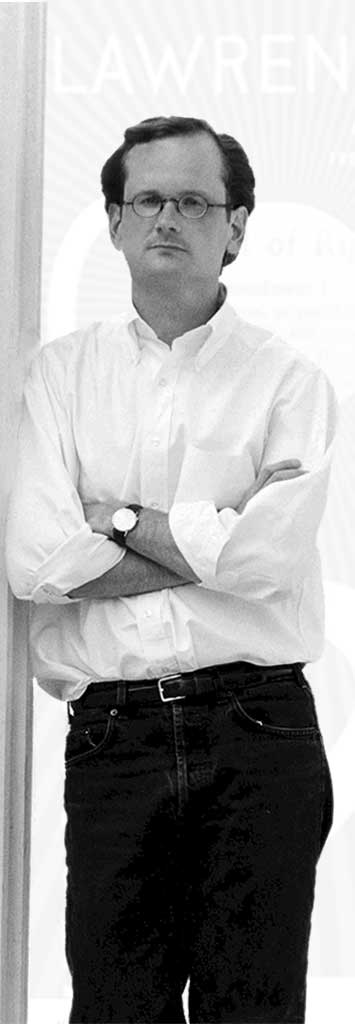
I was again reading and reviewing Lawrence Lessig's work tonight. The man is so very articulate and his observations so compelling. If you haven't become a student of his work, please take my advice and give it a try here.

At the 2002 Open Source Convention Lessig challenged the audience to get involved in the political process. A tireless advocate for open source, Lessig shared some basic concepts that are a solution to most of the barriers preventing our soceity from overcoming the major challenges of the time. A complete transcript of Lawrence's keynote presentation made on July 24, 2002 is available here. In summation his logical findings were as follows.

Creativity and innovation always builds on the past.  

The past always tries to control the creativity that builds upon it.

Free societies enable the future by limiting this power of the past.

Ours is less and less a free society.

Watch the video from Big Thinkers wherein Lessig explains his views on freedom our culture and creativity.

Why Wellness Takes a Back Seat in the Reform Debate

Despite all the talk of reform, there is NO significant aspect of pending legislation to change health care that harnesses the benefits of prevention. As Bill George mentioned during his recent Businessweek article, final health-care legislation is severely compromised by a myriad of lobbyists and special interests who advocate protecting their turf but rarely contribute to sound policy. Numerous side deals have been cut with industry groups that make a noncompetitive market even less competitive. As Bill correctly pointed out, "the bills under consideration will only make a broken system worse, resulting in unintended consequences."

So why the lack of policy reform that really takes into account positives that wellness could provide to the problem of too many people being ill from poor lifestyle choices ? Enter my friend Lawrence Lessig. You see our system of government and policy is unduly influenced by money. That is the reason common sense solutions don't receive the attention they deserve. There are truly NO influencers equivalent to the special interests and money of the medical, insurance, and pharmaceutical extant health care system players . As a result there is no proverbial dog in the fight for wellness. Watch Lessig above explain how special interest blocked health policy on the consumption of sugar as a case in point and join the change congress movement if you really want to get our nation healthy.

Socialnomics & Ownership

I had an interesting exchange with a very reputable business associate yesterday, during which the topic of "ownership" came up as central to his business objectives. We all understand the notion, dedicate yourself to a company, build it up for years and then perhaps sell it for a premium value as you sail away into the sunset. As I woke this morning having thought about the prior days chat, another friend, Rasmus Elmann Ingerslev, had recommended a video on socialnomics that I watched, shown below. I am uncertain if most really understand what socialnomics signifies, as I've concluded its only the beginning of a far larger trend with greater implications beyond those of my facebook account. Similarly I am unclear if most business owners understand what the value of something really is and how these trends will impact it. Hence this post.

What socialnomics represents is the first wave in a series of approaching changes brought on by technology, which will deconstruct numerous and long standing economic paradigms including, among others, distribution, value creation and value exchange. How ? Because social technologies decentralize everything by empowering choice through the ubiquity of information. Social media is but the beginning of a series of tools that will provide users complete control over what is authentic, valuable and meaningful to them, thus obfuscating centralization in any and all systems. This is the essence of "socialnomics": economic rules redefined via new "social media", I call it technological,  tools.

How economics are redefined by socialnomics is very simple. In the past people created wealth largely through one basic principal - they had information others did not and exploited that information to their benefit at the cost of others. These information disparities could last for extended periods and therefore organizations could be sustained for periods of time wherein an advantage existed. In the new economics this will become increasingly difficult because of the ubiquity of information. In "free markets" margins are driven towards zero. Therefore, value will have to be created in new ways, largely via increasingly short term creations of unique solutions. Thus value will be driven increasingly by what customers choose - not in how they are exploited by sustained information disparities or anomalies: a concept shared by the like of Toffler, Anderson and others.

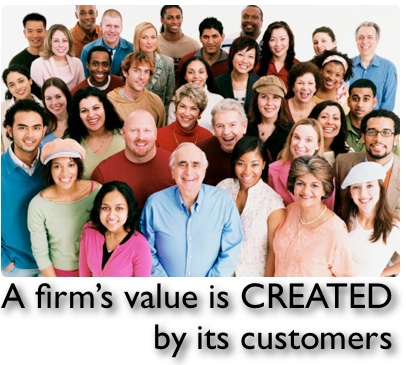
The implications to organizations are enormous because competitive advantages will be increasingly fleeting. In Fung and Wind's book Competing in a Flat World, the notion of value and network organizations is craft fully set out, particularly how organizations must reengineer to become valuable. I've posted on the matter previously. In the old paradigm you could create something of value, build a fence around it and get someone to covet it enough to purchase it. In the new world, the platform is the value, change is too rapid to maintain an extended advantage and in the end your value is only that which your customers deem you deserve. With increasingly lower barriers to entry and free information too many alternatives are available. Think about it, who "owns" Google ? Truthfully, its customers do. If tomorrow everyone stopped using Google its "value" would be zero. Socialnomics reflects a free market in the purest sense and therefore, I ponder if many in business have grasped that fact when they imagine their sailing away into the sunset as a result of something they've built over years. That, I think, will becoming an increasingly rare occurrence.

Prepare for More Augmented Reality

 The combination of the physical and digital world is occuring before our eyes. Its possibilities are as limitless as ones imagination. Increasingly you will see examples of these applications. Be it the GE smart grid promotion or business cards created by Zehnder Communications; both shown in the videos below. This is just the beginning. If you want to learn more, and you should, Kevin Bonsor shares a great article on the topic here. Discover how the integration of digital and physical will increasingly impact our lives.


GE Smart Grid - Augmented Reality from mike geiger on Vimeo.

The Business Card Meets Augmented Reality from Zehnder Communications on Vimeo.